Crowd Barrier Options for Safer Florida Events
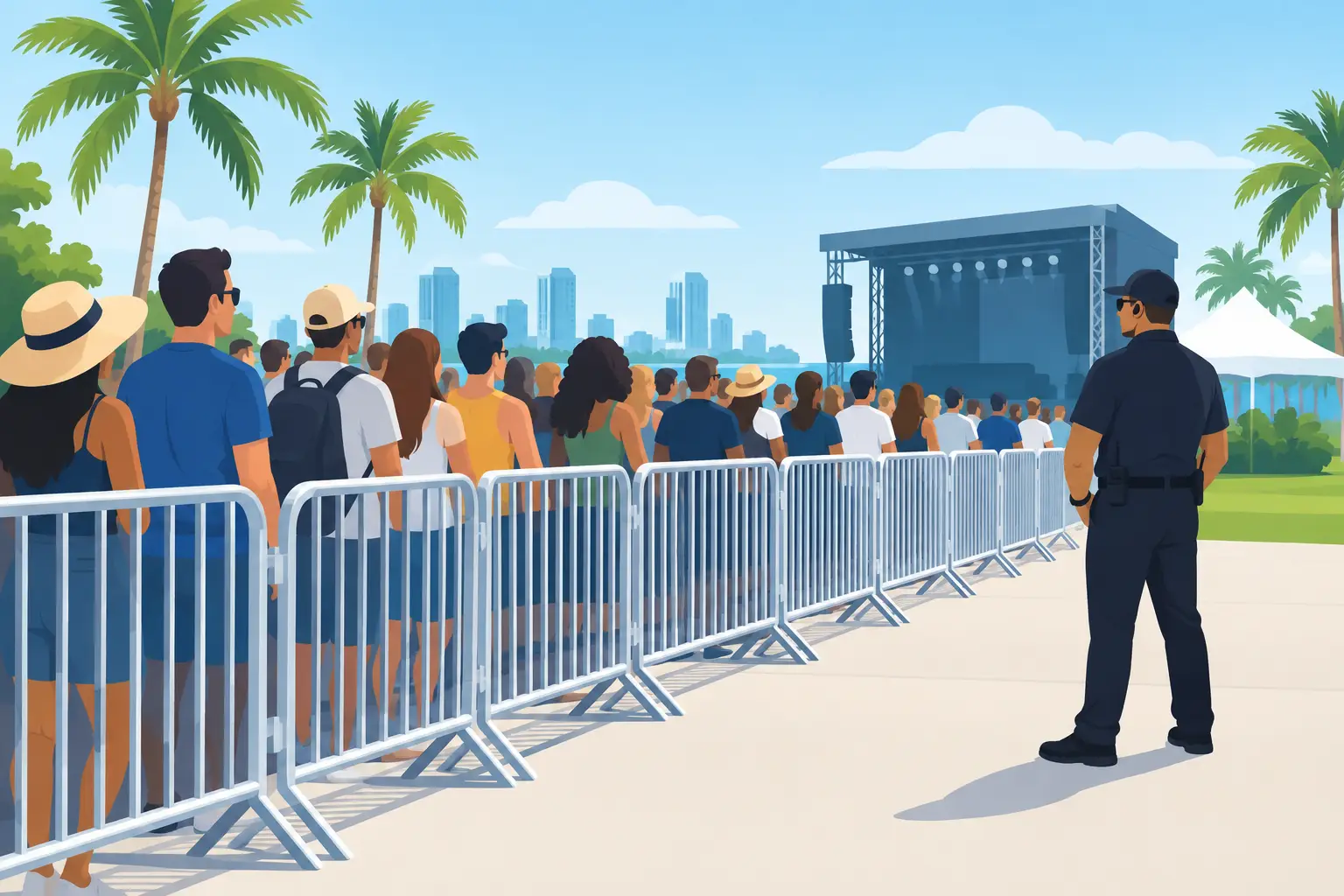
A crowd-control plan is easy to overlook until guests arrive at the same entrance, line up for food, or gather near a stage at once. The right crowd barrier options turn those high-traffic moments into an organized experience without making your event feel restricted. For a wedding in New Smyrna Beach, a church function in Port Orange, or a public event in Daytona Beach, the best choice depends on where people need to go, how long they will wait, and how much flexibility the layout requires.
Start With the Job the Barrier Must Do
Not every barrier is meant to solve the same problem. Some create a polite visual boundary. Others direct a line, protect a work area, or keep attendees away from equipment and restricted spaces. Choosing based on appearance alone can leave gaps in the layout or create a setup that is harder to manage than it needs to be.
Think first about the movement you expect. A registration table may need a simple queue that keeps arrivals from bunching up. A concert, school function, or community festival may need a stronger physical boundary around a stage, generator, vendor loading area, or staff-only entrance. A wedding may use barriers more subtly to guide guests toward the ceremony, bar, or reception without interrupting the look of the event.
It also helps to identify whether the boundary needs to be temporary, movable, or fixed for the full event. A catering line can change as service begins and ends. A backstage area usually should not. This one decision narrows the best rental choice quickly.
Common Crowd Barrier Options and Where They Fit
Stanchions and Rope Barriers
Stanchions are a familiar choice for indoor events, formal celebrations, check-in tables, and orderly queues. They create a clear path while keeping the space open and welcoming. Rope barriers are especially well suited to weddings, galas, and ceremonies where presentation matters as much as direction.
They work best when guests are cooperative and the goal is guidance rather than security. Use them to form a check-in line, separate a photo area, reserve a VIP section, or prevent guests from walking through an equipment setup. They are not the right answer for a dense public crowd or an area where people may push against the boundary.
For a cleaner line, place stanchions close enough that guests understand the route but not so close that the queue feels cramped. Leave adequate room for wheelchairs, walkers, strollers, and guests carrying plates or drinks.
Interlocking Bike Rack Barricades
For outdoor events and larger attendance, metal bike rack barricades offer a more substantial boundary. Their interlocking design helps create continuous runs along walkways, parade routes, stages, vendor areas, and entrances. They are a practical fit for street festivals, races, school events, church gatherings, grand openings, and any event that needs clear separation between guests and operations.
These barricades are more visible and more durable than rope-and-post setups, but they are also more industrial in appearance. That trade-off is usually worthwhile around active or restricted areas. If your event has a formal aesthetic, use them where function matters most, then use décor, lighting, or drape in guest-facing areas where appropriate.
Avoid creating long, closed-off corridors unless they are necessary. Guests need room to enter and exit lines, and staff need a way to respond if someone needs assistance. Plan intentional openings, then position staff or signage where those openings must remain controlled.
Temporary Fencing and Perimeter Barriers
Temporary fencing is useful when the event has a defined footprint or needs to limit access to a particular area. It can help establish ticketed entrances, secure equipment, separate vendor operations, and control where guests enter a tented event site. It is often the better choice when the goal is to define a perimeter rather than manage a single line.
Perimeter barriers require more planning than a few stanchions. Consider delivery access, the surface condition, gate placement, emergency exits, and the route vendors will use before and after the event. On grass, sand, or uneven outdoor ground, placement matters even more. A barrier that looks straight from a distance can become unstable or leave an awkward gap if it is not positioned carefully.
Cones, Delineators, and Simple Visual Markers
Sometimes the goal is not to stop people but to make the intended route obvious. Cones, delineators, and similar visual markers can guide vehicles, mark a loading zone, separate a pickup lane, or flag a temporary hazard. They can also support a larger crowd-control plan by drawing attention to entrances, exits, or no-parking areas.
These lighter options are useful for parking and traffic flow, but they should not be treated as a security barrier. If an area must remain off-limits to guests, use a stronger barrier and clear signage instead of relying on visual markers alone.
Plan the Layout Before You Choose Quantity
The number of barriers you need is determined by the route, not simply the guest count. A 75-person reception may need only a short check-in line and a boundary around audio equipment. A 75-person event with one narrow entrance, a buffet line, and limited parking may need a much more detailed plan.
Start by mapping the guest journey from arrival to departure. Where do people park? Where do they enter? Where will they stop, wait, eat, or gather? Then mark the areas that need separation: staff operations, catering access, staging, power equipment, vendor unloading, and any space reserved for a specific group.
For outdoor Central Florida events, consider weather along with traffic flow. Wind, rain, soft ground, and changing light can affect both placement and visibility. Keep pathways clear, avoid routing guests through muddy or uneven areas, and make sure barriers do not create a trip hazard after sunset. Lighting and signage can be just as helpful as the barrier itself.
Build in Access, Not Just Control
A crowd barrier should make an event easier to navigate. If it blocks the wrong path, forces guests through a bottleneck, or makes it difficult for someone to leave a line, it can create frustration rather than order.
Keep aisles and exits open. Make accessible routes a planned part of the layout, not an afterthought. Guests using mobility devices need enough width to move comfortably, and families with strollers need a clear way around queues and seating areas. If a guest must cross a barrier line to reach restrooms, parking, or an exit, reconsider the arrangement.
Emergency access deserves the same attention. Avoid placing barricades where they interfere with fire lanes, emergency exits, or vehicle access. For larger gatherings, assign staff or volunteers to entrances, gates, and busy queue areas. A barrier defines the route, but people provide the guidance when plans change.
When Rental Support Makes the Difference
Crowd control is rarely a standalone need. It often connects to tents, staging, pipe and drape, lighting, tables, chairs, sound equipment, and catering service. Working with one local rental partner can make the setup more practical because the full site plan can be reviewed together.
Paradise Event Rentals can help event hosts match crowd-control rentals to the rest of their event layout, including delivery and pickup across the East Coast of Central Florida. That is particularly helpful when timing is tight, access is limited, or the event plan changes after the first site walk-through.
Before requesting a quote, have a few details ready: the event location, attendance estimate, site surface, entry points, restricted areas, and delivery window. Photos or a simple site sketch can also help identify issues early. The goal is not to add barriers everywhere. It is to place the right barriers where guests need clarity and your event team needs room to work.
A well-planned boundary should almost disappear into the guest experience. People find the entrance, move through the line, stay clear of restricted areas, and enjoy the event without having to think about why the layout works.