How to Anchor Party Tents Safely in Florida
A party tent can look perfectly secure at setup and become a serious hazard when an afternoon Florida storm rolls in. Learning how to anchor party tents starts with more than driving a few stakes into the ground. The tent size, surface, weather forecast, soil conditions, and manufacturer requirements all affect what a safe setup requires.
For backyard parties, weddings, church events, and community gatherings across Central Florida, anchoring should be treated as part of the event plan, not a last-minute detail. A properly secured tent protects guests, rental equipment, catering setups, and the investment you have made in the event itself.
Start With the Tent and the Event Site
Before choosing stakes, weights, or any other anchoring method, identify the type of tent you are using. Frame tents, pole tents, pop-up canopies, and clearspan structures all have different anchoring points and requirements. A small pop-up canopy is not designed to be secured the same way as a large wedding tent, and a large tent should never be anchored based on guesswork.
Review the tent manufacturer’s instructions or confirm requirements with the rental provider. These specifications tell you where anchors belong, how many are needed, and what load capacity each anchor must provide. Skipping this step can damage the tent frame or fabric even if the anchors appear secure.
Then inspect the event site. Grass, compacted dirt, loose sand, asphalt, concrete, pavers, and decking each call for a different approach. Central Florida yards can also vary significantly from one property to the next. Soil that seems firm on the surface may be sandy or soft underneath, especially after heavy rain.
Check for slopes, drainage paths, sprinkler heads, irrigation lines, underground utilities, septic systems, tree roots, and overhead power lines. Mark the tent footprint before delivery day so there is enough room for the tent, anchor locations, entrances, sidewalls, and guest traffic.
How to Anchor Party Tents on Grass and Dirt
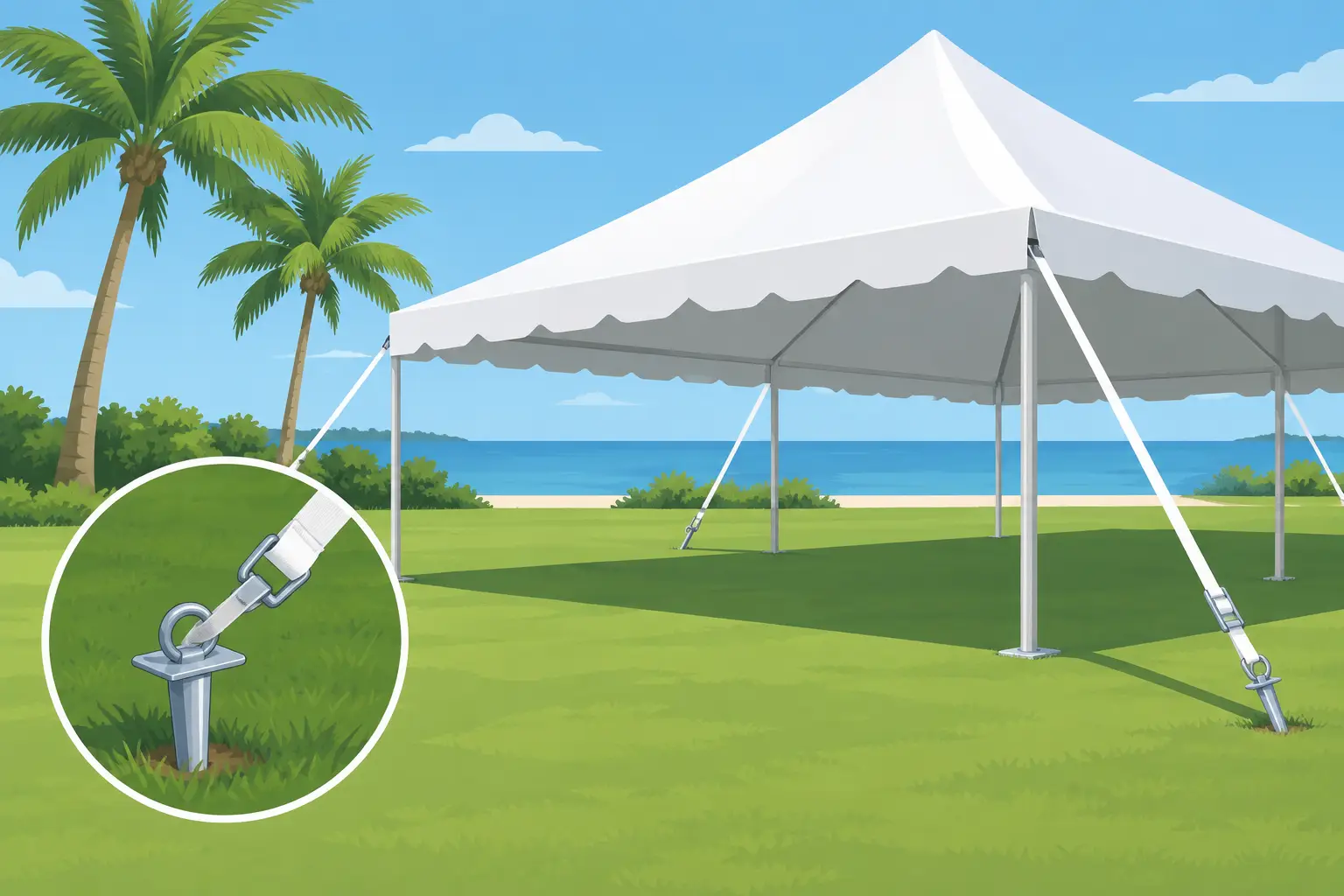
Stakes are often the preferred anchoring solution for tents installed on grass or suitable dirt because they provide direct resistance in the ground. They must be the correct length, diameter, and type for the tent and soil conditions. Short, lightweight stakes that come with a consumer canopy may not be appropriate for a commercial rental tent.
Professional tent stakes are typically driven at an angle away from the tent, following the manufacturer’s specified placement. The anchor point should line up with the tent leg, strap, or ratchet assembly so the force pulls outward and downward as intended. Never tie a tent leg to a random fence post, small tree, patio furniture, or vehicle. These improvised anchor points can fail or create dangerous stress on the frame.
Stakes work best when the soil offers enough holding strength. Sandy ground is common near New Smyrna Beach and other coastal areas, and it may require longer stakes, engineered anchors, or an alternate anchoring plan. Saturated soil can also weaken quickly. If rain has softened the ground, the same stake placement that held the tent earlier in the day may no longer be reliable.
Before stakes go into the ground, call 811 or use the local utility-locate process well ahead of the event. Do not assume a residential lawn is clear because there are no visible utility boxes. Underground electrical, irrigation, cable, gas, and water lines can be present where you least expect them.
Use Proper Ballast on Pavement, Concrete, and Pavers
When staking is not possible, tents need engineered ballast. This is especially common for events on driveways, parking lots, patios, courtyards, pool decks, and paved venues. The amount of ballast needed depends on the tent design, size, expected wind conditions, and the manufacturer or engineer’s requirements.
Concrete tent weights, water barrels, and other approved ballast systems can work when they are sized and attached correctly. The key word is approved. A few decorative planters, sandbags, or folding chairs are not reliable substitutes for specified tent weights. In strong wind, an underweighted tent can shift, lift, or collapse before anyone has time to react.
Each leg or designated anchor point must receive the required amount of ballast, not just the corners. Weight should be secured with proper straps or ratchets so it cannot slide away from the tent. It also needs to remain out of walkways and clearly visible where guests may be carrying food, drinks, or children.
Pavers require extra care. Heavy weights can crack or settle pavers if the surface is not rated for the load. A professional setup team can evaluate whether the area is suitable and use protective pads or choose a different layout if necessary.
Sand Requires More Than a Few Stakes
Beach and waterfront events bring beautiful views, but sand is one of the most challenging surfaces for tent anchoring. Standard stakes can pull loose in dry, loose sand, particularly during gusty conditions. Tides, wind direction, dune restrictions, public access rules, and local permits may also affect where a tent can be placed.
For a beach event, use a tent and anchoring system designed for the conditions. Depending on the structure, that may mean specialized sand anchors, screw anchors, buried deadman anchors, or a ballast plan approved for the tent. The correct method depends on the specific tent and site, so this is not a situation for a one-size-fits-all setup.
Keep an eye on changing conditions throughout the event. Sand can shift, water can soften an anchor area, and a breezy morning can become a windy afternoon. If the site is on public property or near the shoreline, confirm venue and municipal requirements before finalizing the tent plan.
Watch the Weather, Not Just the Forecast Icon
Florida weather can change quickly. A forecast that shows a small chance of rain does not explain the timing or strength of a thunderstorm cell, wind gusts, lightning risk, or saturated-ground conditions. Assign one responsible person to monitor weather alerts before and during the event.
Tents are temporary shade and shelter structures. They are not safe places to remain during lightning, severe thunderstorms, or high-wind conditions. Have a clear plan for moving guests indoors, to vehicles, or to another approved shelter if conditions deteriorate. This matters even more for weddings, school functions, festivals, and events with older guests or young children.
Do not wait until the tent is moving to make a decision. If straps loosen, stakes begin lifting, ballast shifts, water pools on the canopy, or the frame starts to rack, clear the area and contact the rental provider or setup professional. Never climb on a tent, hang additional items from the frame, or attempt major adjustments while wind is active.
Keep Loads Off the Tent Frame
A tent’s anchoring system is designed to manage specific forces. Adding decorations, string lights, signage, drape, fans, or audio equipment can change those forces. Wet fabric, pooled water, and hanging items add weight. Wind can turn banners and sidewalls into sails.
Use only approved attachment points and ask before hanging anything substantial from the tent frame. Sidewalls should be installed and secured according to the tent design, with weather conditions in mind. They can provide privacy and block light rain, but they can also increase wind pressure on the structure.
Keep tables, chairs, buffet lines, and dance floors arranged so tent legs, ratchets, straps, and weights remain accessible. Guests should not have to step over anchor points, and staff should be able to inspect the setup without disrupting the event.
Know When Professional Setup Is the Right Choice
A small, low-profile canopy for a calm backyard gathering may be manageable for an experienced homeowner who follows the manufacturer’s instructions. Larger tents, paved installations, beach setups, public events, weddings, and any event with a meaningful guest count deserve professional planning and installation.
The trade-off is straightforward: handling setup yourself may appear to save time or money, but the wrong anchor method can lead to property damage, injuries, canceled plans, and avoidable stress. A qualified rental team can help match the tent to the site, provide appropriate anchoring, coordinate delivery and pickup, and adjust the plan when weather or event details change.
At Paradise Event Rentals, the goal is to make the tent portion of your event feel handled, not uncertain. Share the site location, surface type, guest count, event hours, and any venue requirements early. That gives your setup team time to recommend a safer layout and the right equipment.
A well-anchored tent should fade into the background once guests arrive. Plan for it carefully, inspect it before the event begins, and give yourself a weather backup plan so everyone can focus on the celebration.