Event Power Planning for Central Florida Events
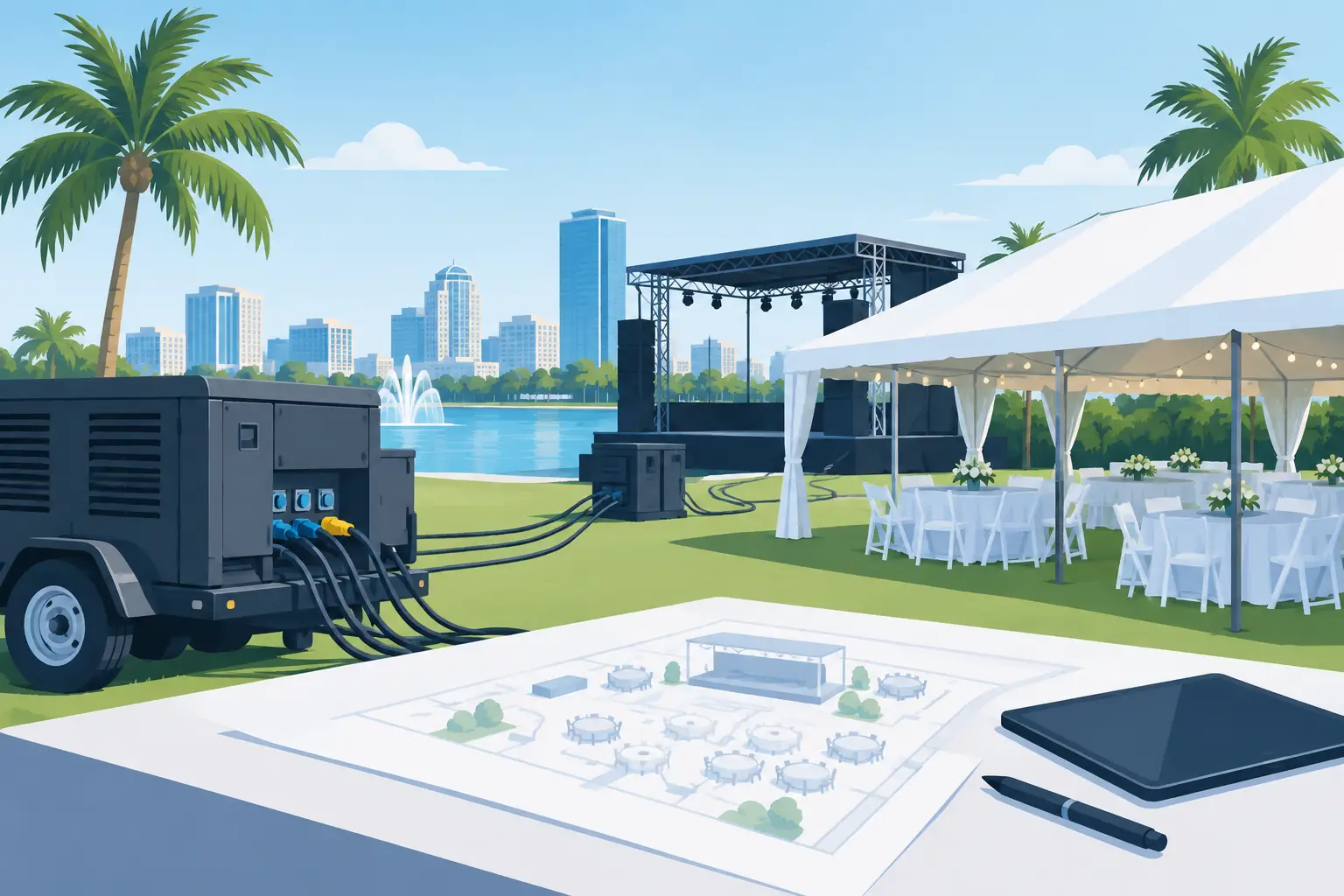
A string of patio lights, a catered buffet, a DJ setup, and fans under a tent can turn a simple backyard outlet into the weak point of an otherwise well-planned event. Event power planning is the process of identifying what needs electricity, how much power it requires, and how it will be distributed safely before guests arrive. For weddings, church gatherings, corporate functions, and community events across Central Florida, it is not a minor technical detail. It is part of the event infrastructure.
Power needs can change quickly once an event moves outdoors, expands into multiple areas, or adds equipment at the last minute. A dependable plan gives every vendor a clear answer to an essential question: where do I plug in, and can that circuit handle it?
Start Event Power Planning With the Full Site
Do not begin by counting outlets. Begin by walking the event site and mapping the experience guests will have. Mark the ceremony area, tent, bar, catering station, restrooms, stage, dance floor, check-in table, parking area, and any vendor workspaces. Then identify the power source closest to each zone.
At a home or venue, an outlet may be convenient without being suitable. Two outlets on opposite sides of a patio can be connected to the same household circuit. A circuit that already supports a refrigerator, pool pump, or interior lighting has less available capacity than it appears to have. For a public space or vacant lot, permanent power may be limited or unavailable altogether.
Ask the venue or property owner where the electrical panel is located, which outlets are on dedicated circuits, and whether outdoor outlets are protected by ground-fault circuit interrupters, commonly called GFCI outlets. If there is uncertainty about the condition or capacity of the electrical system, involve a qualified electrician or generator provider instead of making assumptions on event day.
Build a Real Equipment Load List
The most useful event power planning tool is a complete equipment list, not a rough guess. Gather power requirements from every vendor early, including the caterer, DJ or band, photographer, bartender, rental provider, and anyone supplying specialty equipment.
Include obvious items such as speakers, mixers, microphones, string lights, uplighting, refrigerators, coffee makers, warming cabinets, portable air conditioners, and fans. Also include equipment that is easy to overlook: phone charging stations, point-of-sale devices, laptop chargers, inflatables, photo booths, security lighting, restroom trailers, and powered staging accessories.
Each item should have a wattage or amperage rating. Wattage is often printed on the equipment label. If only amps are listed, a basic estimate for standard 120-volt equipment is amps multiplied by 120 equals watts. A 10-amp device, for example, uses about 1,200 watts. This gives planners a common number for comparing equipment needs.
Add the loads by event zone rather than creating one long total. The catering tent may need a separate power plan from the stage, while decorative lighting may be better on another circuit entirely. This approach makes it easier to prevent a high-demand appliance from sharing a circuit with sound equipment.
A generator should not be sized at the exact calculated total. Equipment can draw extra power when it starts, and vendor needs sometimes change. Leave practical headroom, particularly for motors, refrigeration, air conditioning, and cooking equipment. The right amount depends on the equipment type and whether all items will run at the same time, which is why a load list is more useful than choosing a generator by event size alone.
Separate Power by Function
A working outlet is not the same as a well-designed power layout. Separating equipment by function protects critical parts of the event when something unexpected happens.
Audio equipment deserves clean, dedicated power whenever possible. DJs, bands, wireless receivers, mixers, and amplified speakers can be sensitive to voltage fluctuations and electrical noise. Keep them away from high-draw equipment such as coffee makers, heaters, fryers, warming cabinets, or large refrigeration units. If a catering appliance cycles on and trips a breaker, the last thing anyone wants is the ceremony microphone or reception music going silent with it.
Lighting should also be divided thoughtfully. Emergency access paths, exits, stairs, and guest walkways need dependable illumination. Decorative bistro lights, uplighting, and dance floor effects can be on separate circuits so a problem with one feature does not leave the entire site dark.
For larger layouts, use properly rated distribution equipment and extension cords designed for the job. Household cords are not a good solution for long distances, heavy loads, or high-traffic areas. Cords should be rated for outdoor use when exposed to weather, kept out of standing water, and protected where they cross walkways. Cable ramps and cord covers help reduce trip hazards while keeping the setup cleaner and more professional.
Plan for Florida Weather, Not Just the Forecast
Central Florida events are often planned around sunshine, then tested by afternoon rain, humidity, wind, and heat. Outdoor power setups need weather protection from the start, not after the first cloud appears.
Keep connections elevated off wet ground and use weather-resistant covers where appropriate. Generators and electrical equipment need ventilation and must stay clear of tent sidewalls, entrances, and guest gathering areas. Never place a generator inside a tent, enclosed structure, or poorly ventilated space because of carbon monoxide risk.
Heat matters, too. Fans and cooling equipment are common additions under tents, especially for spring and summer receptions. They can make guests far more comfortable, but they also increase the electrical load. A plan that worked for lighting and a sound system may not have room for six high-powered fans added an hour before guests arrive.
Rain plans should address operations, not only guest seating. Decide who has authority to shut down exposed equipment, who will cover or relocate electronics, and how vendors will communicate if weather moves through during setup. A tent, sidewalls, lighting, and power distribution should be planned as connected pieces of the same outdoor environment.
Coordinate Setup Before Vendors Arrive
Power planning works best when it is completed before tables are dressed, food is delivered, and guests are parked nearby. Schedule generators, cable runs, and distribution equipment early in the setup sequence. Once a venue is filled with seating, floral arrangements, staging, and décor, correcting a missed power route becomes slower and more disruptive.
Review the layout with vendors before the event begins. The caterer should know which outlets or circuits are assigned to kitchen equipment. The entertainment team should know where its dedicated power is located. The bar team may need power for refrigeration, blenders, or point-of-sale equipment. Clear assignments prevent vendors from plugging into the nearest outlet simply because it is available.
Test the system under realistic conditions. Turn on the sound system, lights, refrigeration, fans, and other major equipment before the event opens. Watch for overloaded circuits, loose connections, dimming lights, or equipment that does not perform as expected. It is much easier to relocate a cord or add capacity during setup than during a first dance, keynote presentation, or dinner service.
Know When a Generator Is the Better Choice
A generator is often the practical answer for events on open land, waterfront properties, parks, or sites where existing power is limited. It can also be the safer choice for a large backyard event that would otherwise depend on several household circuits.
The trade-off is that generators require planning for location, fuel, noise, cable distance, and proper sizing. A generator placed too close to guests can interfere with conversation and music. One placed too far away may require longer cable runs and more careful protection. The best location is accessible for service, well ventilated, away from doors and gathering areas, and positioned so cables can be routed safely.
For a wedding or event with no room for interruption, backup capacity may be worth considering. That does not always mean a second generator. It may mean reserving a separate circuit for the most critical equipment, keeping battery-powered backup options for small electronics, or having a clear response plan if utility power fails.
Make Power Part of the Rental Conversation
When requesting tents, lighting, staging, audio equipment, fans, or catering rentals, share the site details and event schedule at the same time. A one-stop rental partner can spot connections between categories that are easy to miss when each piece is arranged separately. Paradise Event Rentals can help Central Florida hosts coordinate practical equipment needs so the setup supports the way the event will actually operate.
The goal is not to make your event feel technical. It is to make the technical work disappear into the background. When power is planned early, guests notice the music, the food, the lighting, and the celebration – not a tripped breaker, a dark walkway, or a vendor searching for an outlet.