Event Tents That Fit Your Central Florida Event
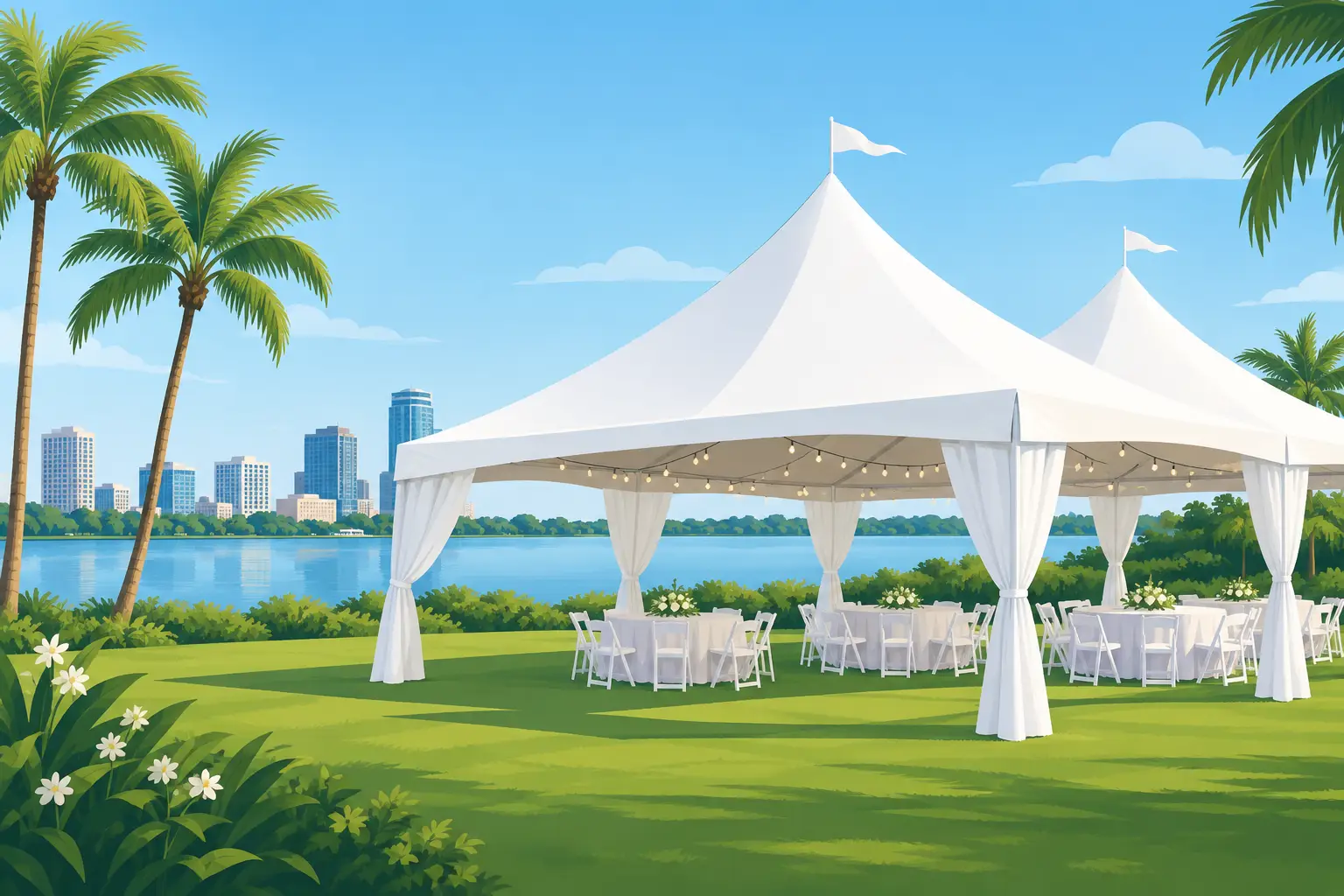
A tent can turn a sunny backyard, church lawn, waterfront property, or parking area into a usable event space. But event tents are not a one-size-fits-all rental. The right choice depends on guest count, layout, weather exposure, ground conditions, and the equipment you need beneath it. Planning those details early helps your event feel comfortable instead of crowded and gives every other rental decision a clear starting point.
Start With the Event, Not Just the Guest Count
Guest count matters, but it does not tell the whole story. A tent for 75 guests at a standing cocktail reception will look very different from a tent for 75 guests seated at round tables with a buffet, dance floor, bar, and DJ.
For a casual gathering where guests are mostly standing and moving around, you can use space more efficiently. Seated meals require more room for tables, chairs, service paths, and people getting in and out of their seats. A wedding reception also needs room for moments that are easy to overlook at first, including a cake table, gift table, sweetheart table, catering stations, and space for the wedding party.
Before selecting a tent size, outline what needs to fit inside it. A simple site sketch is helpful. Mark the dining area, food and beverage service, entertainment, entrances, and any equipment that should stay protected from sun or rain. If the event will have a dance floor or stage, decide whether those elements belong under the tent or in a separate covered area.
It is usually better to allow a little extra room than to plan for the tightest possible layout. Guests remember being comfortable. They also notice when tables are too close together, buffet lines block walkways, or there is nowhere to step out of the weather.
Event Tents Need the Right Location
The best tent on paper may not work on every property. Before reserving event tents, measure the available area and look beyond the open space itself. Tent installation needs clear access for delivery and setup, plus adequate room around the structure for anchoring and safe entry.
Grass is often a good tent surface, especially when stakes can be used to secure the tent. However, utility lines, irrigation systems, tree roots, uneven grades, and soft ground can affect placement. Pavement, concrete, and compact surfaces may require weighted anchoring rather than stakes, which can change the setup plan and available interior space.
In coastal Central Florida, wind exposure deserves special attention. An open lot near the water may feel ideal for views, but it can receive stronger gusts than a sheltered backyard or venue courtyard. Nearby buildings, trees, fences, and elevation can all affect wind conditions. A rental professional can help evaluate the site and recommend a practical placement plan.
Do not forget overhead clearance. Branches, power lines, roof overhangs, and decorative string lights can interfere with installation. A clear photograph of the site, along with basic measurements, makes it easier to plan accurately before delivery day.
Consider the Ground Underfoot
Guests will spend hours walking, standing, and dancing, so the ground condition matters as much as the cover overhead. Damp grass can become slippery, sandy surfaces can shift under chairs, and uneven ground can make tables wobble.
For formal events, flooring, a dance floor, or carefully placed walkways can make the space feel more finished and easier to use. For casual family parties, a tent over level grass may be all that is needed. The right approach depends on the event style, the forecast, and how much foot traffic the area will receive.
Plan for Florida Weather From Every Direction
A tent provides shade and weather protection, but it works best when the full weather plan is considered. Central Florida events can involve intense sun, afternoon showers, humidity, sudden wind, and cooler evenings during certain months. Thinking through each possibility prevents last-minute scrambling.
Tent sidewalls can be useful when rain is likely or when wind comes from one direction. They can also provide privacy, define a reception area, or reduce glare during a daytime presentation. At the same time, closing every sidewall on a warm day can reduce airflow. In many cases, partial sidewalls offer a better balance of protection and ventilation.
Fans can make a major difference during warm-weather weddings, reunions, graduation parties, and community events. Lighting is equally important if guests will arrive before sunset or stay into the evening. A tent may look bright during setup, then become difficult to navigate once the sun goes down. Lighting should cover entrances, dining spaces, bars, walkways, and service areas without creating harsh glare.
For events with electrical needs, plan power early. Catering equipment, audio-video equipment, bands, DJs, fans, lighting, and charging stations can add up quickly. Keep cords organized and protected so they do not create trip hazards in guest areas.
Match the Tent Layout to the Event Experience
A tent should support how people will use the event, not simply cover as much ground as possible. For a wedding, guests may need a welcoming entrance, open aisleways, a dining area, and a clear view of the dance floor or head table. For a corporate function, the priority may be registration, presentation sightlines, product displays, or crowd flow.
A buffet should have enough space for a line to form without cutting through the dining area. Bars need room for guests to approach and step away. If a band or DJ is performing, keep speakers and staging positioned so sound reaches the crowd without overwhelming nearby conversations.
For larger public events, consider separate tents or covered zones for check-in, food service, seating, vendors, and first aid. This can make the site easier to navigate and prevent one busy area from affecting the rest of the event. Church functions and nonprofit gatherings often benefit from this approach because activities may run at the same time for different age groups.
Build One Rental Plan Instead of Managing Separate Pieces
Tents work best when they are planned alongside the rest of the event rentals. Tables determine the layout. Chairs determine seating capacity. Linens affect the finished look. Bars, staging, lighting, dance floors, pipe and drape, dinnerware, and crowd control products all require space and coordination.
Working with one rental partner reduces the chance of mismatched delivery times or equipment arriving without a place to go. It also makes last-minute adjustments easier. If the guest list grows, the layout changes, or the weather forecast calls for more coverage, it helps to have one team looking at the full picture.
Paradise Event Rentals can coordinate tents with the practical essentials around them, from seating and linens to staging, lighting, catering supplies, and pickup after the event. That kind of planning support is especially useful for first-time hosts, busy families, and organizations managing several event details at once.
Ask These Questions Before You Reserve
A quick conversation before booking can prevent most tent-related problems. Confirm the number of guests, whether they will be seated or standing, the size of the usable site, and the type of surface. Share the event date and schedule, including setup time, guest arrival, and breakdown needs.
Also discuss food service, entertainment, power requirements, sidewalls, lighting, and any special access limitations. If you are hosting at a venue, ask about its tent rules, approved setup areas, insurance requirements, and whether staking is allowed. A venue may have restrictions that are not obvious during an initial walkthrough.
It is also wise to ask what happens if the weather changes. Some adjustments require advance notice, while other solutions depend on inventory and site conditions. The earlier you identify weather-sensitive parts of the event, the more options you will have.
Give Setup the Time It Deserves
Tent installation should not be squeezed into the hour before guests arrive. The tent needs to be set, secured, and checked before tables, chairs, linens, décor, catering equipment, or audio equipment move into the space. Allowing time for this process creates a calmer setup day and gives you a chance to make small layout changes before the event begins.
If you are decorating, coordinate with the rental schedule so vendors know when they can access the tent. Florists, caterers, planners, photographers, and entertainment teams all work more efficiently when the event footprint is clearly established.
A well-planned tent does more than provide cover. It gives your guests a comfortable place to gather, eat, celebrate, and stay present when Florida weather has other ideas. Start with the space you need, plan for the conditions you may face, and let the tent become the dependable foundation for the event you want to host.