Stage Weight Capacity for Safer Florida Events
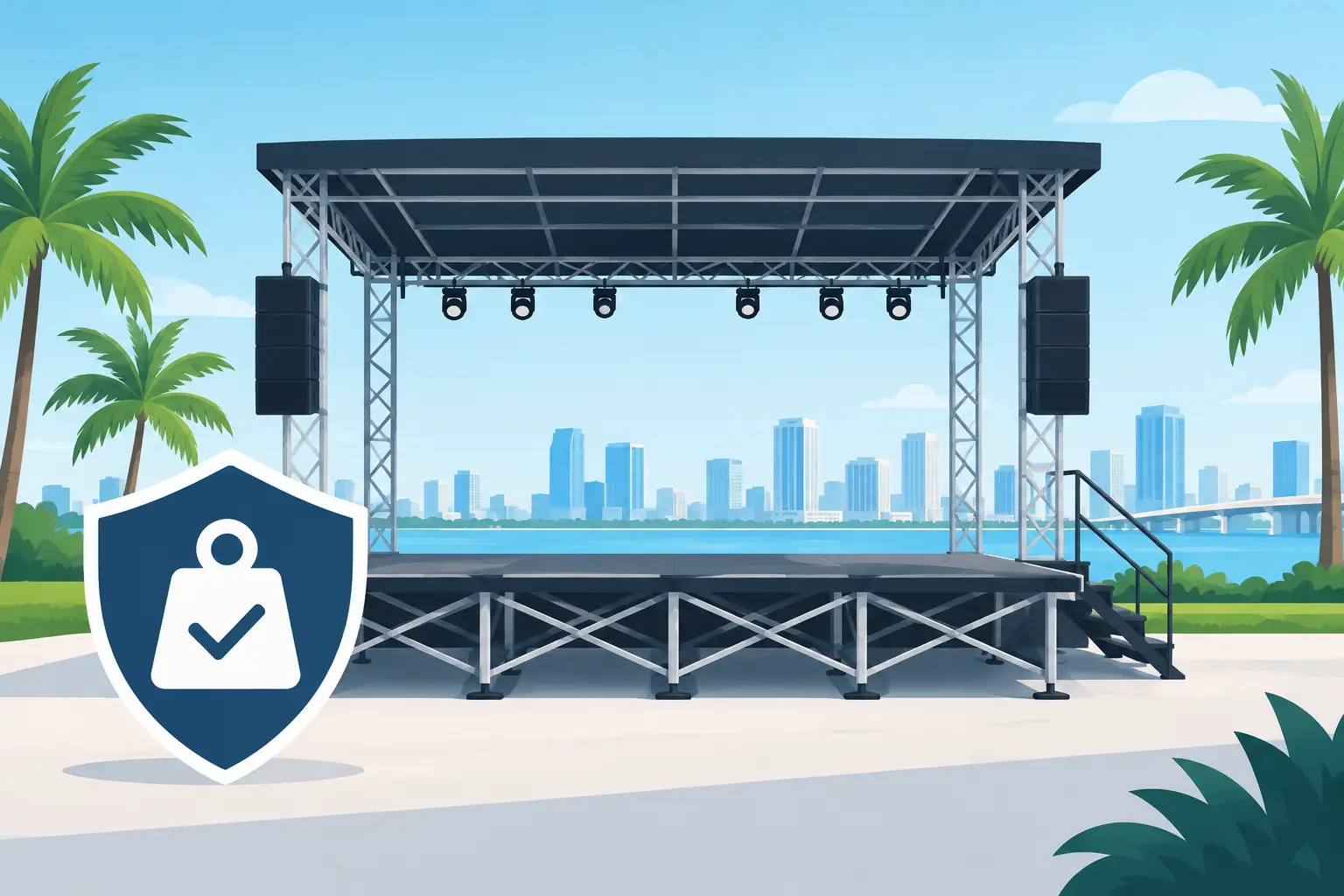
A stage can look perfectly fine during setup and still be carrying more weight than it was designed to support once performers, speakers, instruments, décor, and crew step onto it. Stage weight capacity is not a detail to settle after the event layout is finalized. It should shape the stage size, configuration, equipment plan, and who will use the platform from the beginning.
For weddings, church services, corporate programs, concerts, school events, and community gatherings across Central Florida, the safest approach is simple: know what the stage is rated for, understand how the weight will sit on it, and communicate the full plan before delivery and setup.
What Stage Weight Capacity Actually Means
Stage weight capacity is the maximum load a stage system can safely support under its intended conditions. That rating may be expressed as pounds per square foot, a total weight limit, or both. The distinction matters because 1,500 pounds spread across a large platform behaves very differently from 1,500 pounds concentrated beneath a drum kit, speaker stack, or group of people standing in one area.
A stage system is more than the deck panels guests see. Its capacity is affected by the decks, legs, braces, connectors, stairs, guardrails, the ground beneath the stage, and the way the pieces are assembled. A properly configured system on level, firm ground can perform as intended. The same components on uneven grass, soft sand, loose pavers, or a sloped surface may need a different plan.
Weight ratings are also not invitations to load a stage right to the limit. Events change quickly. A band may add another musician, a presenter may invite ten people onstage for a recognition photo, or a production team may roll in equipment that was not on the original diagram. Leaving a practical safety margin gives the event room to operate without turning every change into a concern.
Start With the Full Load, Not Just the Performers
When clients estimate stage needs, they often begin by asking how many people will stand on the stage. That is a useful starting point, but people are only one part of the load. A small wedding ceremony platform may carry an officiant, couple, wedding party, floral arrangements, a backdrop, and audio equipment. A live music stage may carry musicians, instruments, monitor speakers, amplifiers, microphone stands, lighting supports, and technicians moving during the performance.
Before selecting a stage, list everything expected to be on it at the same time. Include people, equipment, furniture, décor, and temporary items such as awards tables or product displays. Then consider the heaviest realistic moment of the event, not the average moment.
For example, a corporate presentation may normally have one speaker and a podium onstage. During an employee recognition segment, it could have the presenter, several recipients, a photographer, an awards table, and additional staff waiting for photos. That moment should be part of the plan.
A complete staging conversation should account for four areas:
- The maximum number of people expected on the platform at one time
- Equipment weights, including speakers, instruments, podiums, furniture, and displays
- Where heavy items will be positioned and whether they create concentrated loads
- The stage surface and site conditions, including weather exposure and ground stability
Sharing those details early helps your rental provider recommend a stage layout that supports the program rather than forcing last-minute compromises.
Distributed Weight vs. Point Loads
One of the most common misunderstandings about stage weight capacity is assuming that a total weight rating tells the entire story. It does not. Weight distribution matters.
Distributed weight is spread across a broad area. A group of people standing across the platform is generally a more evenly distributed load than a heavy equipment case or speaker resting on a small footprint. A point load is concentrated in one spot, placing more stress on a limited section of the deck and support structure.
This is why a stage approved for a certain number of performers may still need a different configuration for production equipment. A large loudspeaker, keyboard rig, grand piano, stacked display, or heavy bar setup may require special placement, additional support, or an alternative location off the stage.
Do not assume that placing all heavy equipment at the back solves the issue. Depending on the stage design, concentrating weight along one edge can create its own problems. The safest placement depends on the specific staging system and site plan. A rental professional can help identify the appropriate layout before setup day.
Dynamic Movement Changes the Load
Stages are built for use, but movement still matters. A keynote speaker walking across a platform creates a different load pattern than a stationary podium. A dance performance, energetic band, fitness demonstration, or group entrance introduces repeated movement and impact that should be considered during planning.
This does not mean every active event needs an oversized stage. It means the stage needs to be selected for the actual event. A simple ceremony riser has different requirements than a platform for a DJ and wedding party, and both differ from a concert stage with a full band and sound equipment.
Be clear about the program when requesting a quote. Mention whether the stage will be used for dancing, live music, presentations, choir seating, a panel discussion, or a photo moment with a large group. The use case can affect the recommended size, height, access points, railings, and capacity planning.
Ground Conditions Are Part of the Capacity Plan
Central Florida events often take place outdoors, where site conditions deserve as much attention as the stage itself. A backyard lawn, beachfront area, park, church property, or festival field may look level from a distance while having soft spots, irrigation lines, slopes, or drainage issues that affect staging.
Rain can change a site quickly. Ground that felt firm during a walkthrough may soften after a storm, especially under a tent or in a high-traffic area. Wind and wet conditions can also influence how equipment, drape, lighting, and audio components should be secured and positioned.
Whenever possible, schedule a site review for larger stages, elevated platforms, public events, or setups carrying significant equipment. Take photos of the proposed location and identify access routes for delivery. Let the rental team know about gates, narrow paths, steps, curbs, overhead branches, underground utilities, and time restrictions. Good staging starts with a site that can safely receive it.
Build Safety Into the Stage Design
Capacity is one part of a safe stage, not the whole plan. The stage height, stairs, handrails, skirting, guardrails, ramps, and access points should match the audience and the program.
A low platform may work well for a backyard celebration or a small indoor presentation. A taller stage can improve visibility for a large audience, but it also increases the need for secure stairs, railings where appropriate, and clear backstage access. If children, older guests, performers in formal attire, or people with mobility needs will use the stage, those details become especially important.
Cable management matters too. Audio, lighting, and video cables should be routed so they do not create tripping hazards at stairs, entrances, or performer positions. Keep equipment cases and unused gear off the deck whenever possible. A clean stage is easier to use, easier to photograph, and safer for everyone moving through the event.
Avoid Last-Minute Additions Without a Check
Many capacity issues begin with a reasonable request made late in the process: adding a second speaker, moving the DJ onto the platform, bringing chairs up for a panel, or placing a large floral wall behind the wedding party. None of these requests are automatically unsafe, but each can change the load and layout.
If the stage plan changes, contact the rental provider before moving equipment or adding people. Paradise Event Rentals can help review the new setup and determine whether the stage needs to be resized, reconfigured, or supported with additional components. That call is far easier to make before guests arrive than during a program.
Event planners should also designate one person who can approve stage changes on event day. This avoids well-meaning vendors or volunteers placing equipment wherever there is open space. Clear communication keeps the staging plan intact from setup through teardown.
Questions to Ask Before You Rent a Stage
A dependable rental conversation should give you clear answers, not vague assumptions. Ask what capacity rating applies to the selected stage configuration and whether it is based on pounds per square foot, total load, or both. Ask whether your planned equipment creates concentrated loads and whether the ground conditions call for any adjustments.
It is also reasonable to ask about recommended stage size, height, stairs, railings, skirting, and access. If your event includes unusual equipment, a large group onstage, elevated production elements, or public attendance, provide dimensions and weights whenever available. For complex builds, follow the guidance of qualified staging and engineering professionals as needed.
The right stage should feel like a dependable part of the event, not a piece of equipment you have to worry about all day. Plan for the heaviest moment, respect the rated capacity, and give your rental team the full picture. That preparation helps create a platform that supports the program, the people on it, and the smooth event experience your guests deserve.