How to Light an Outdoor Reception With Ease
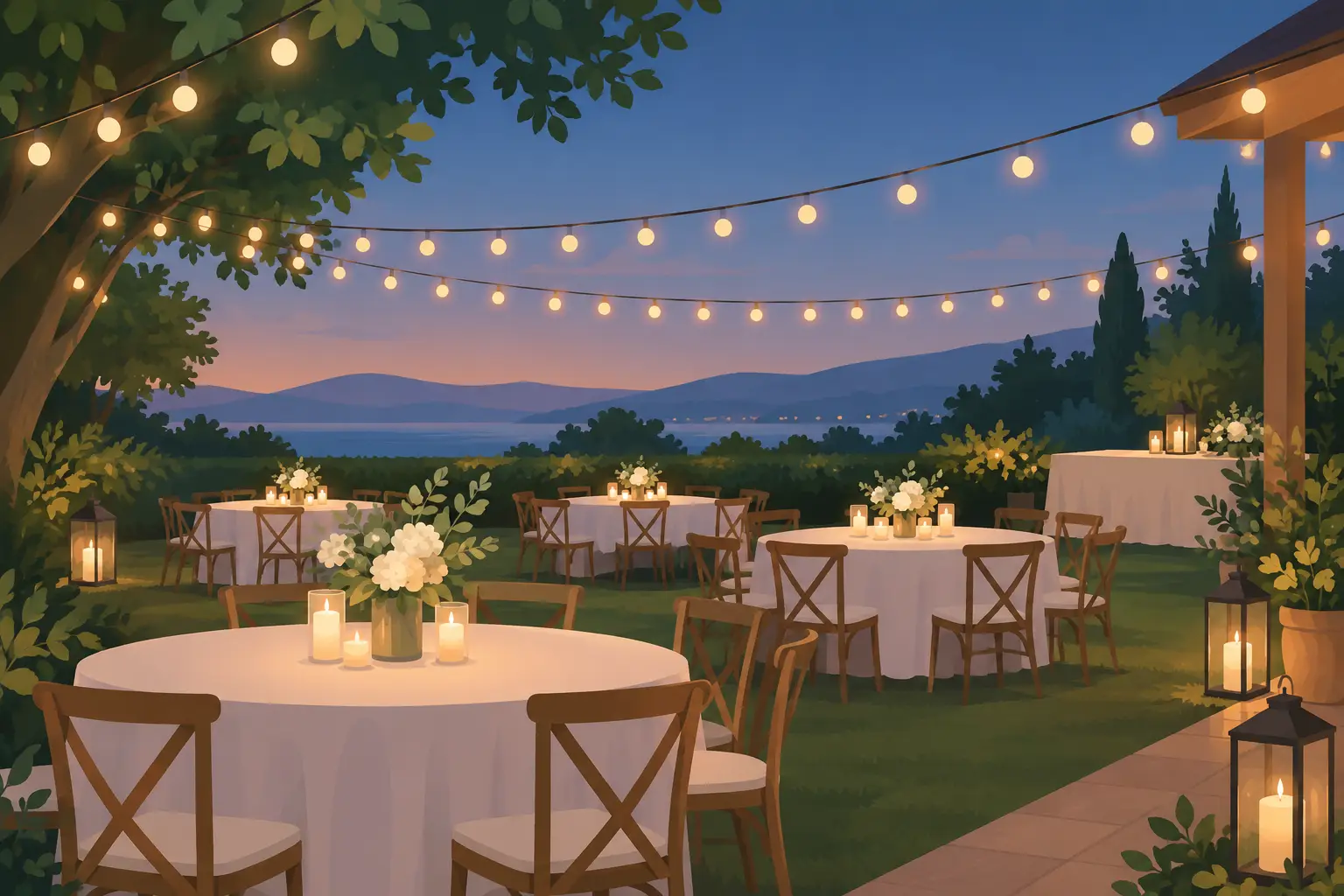
A beautiful outdoor reception can lose its energy quickly when sunset arrives and guests cannot see their tables, find the restroom, or safely walk to the bar. Knowing how to light an outdoor reception is less about choosing one impressive fixture and more about planning several useful layers of light that work together.
For receptions in New Smyrna Beach, Port Orange, Daytona Beach, and across Central Florida, that plan also needs to account for humidity, wind, changing weather, and the way a property looks after dark. The right lighting helps guests feel comfortable, keeps the schedule moving, and gives your photos a polished backdrop without making the event feel overly bright.
Start With Safety and Guest Movement
Before choosing string lights or uplighting colors, walk through the event site as if you were a guest arriving after sunset. Where will people park? How will they enter the reception? Where are the tent openings, restrooms, buffet, bar, dance floor, and exit paths?
Those routes need clear, practical illumination. Pathway lighting, carefully placed floodlights, or low-profile fixtures can define walking areas without shining directly into guests’ eyes. Pay particular attention to transitions: a step off a patio, a curb near a parking area, uneven grass, and the edge of a dance floor are all places where low light can create a problem.
Avoid relying on candles alone for these areas. Candles can add warmth to tables, but they do not provide enough usable light for a walkway or service station. They also need extra care around wind, linens, children, and crowded tables.
Build Your Outdoor Reception Lighting in Layers
The most welcoming reception lighting has a purpose behind every layer. Start with the light guests need to see and move safely, then add light that defines the space and finally bring in decorative details.
Ambient light sets the overall mood
Ambient lighting is the broad, comfortable glow across the reception area. Under a tent, globe string lights, café lights, or chandeliers can make a large space feel more finished and inviting. Over an open lawn, string lights suspended from poles, trees, or a properly planned frame can create a clear gathering area after dark.
Warm white light is usually the most flexible choice for weddings, family celebrations, and business events. It looks flattering in photos, works with nearly every linen color, and gives the reception a relaxed feel. Cool white lighting can look sharp for a modern corporate event, but too much of it may feel harsh for dinner service.
The height and spacing matter as much as the fixture itself. Lights hung too low can interfere with tall guests, servers, or a busy dance floor. Lights set too high may disappear into the darkness and provide less visual impact. A rental professional can help determine the right layout for a tent size, ceiling height, or open-air footprint.
Task lighting keeps service areas functional
Task lighting supports the work happening at the event. The catering team needs to see food labels and serving utensils. Bartenders need enough light to prepare drinks accurately. Musicians and DJs need light for equipment, while the guest book, card table, and restroom area need to be easy to use.
This lighting should be bright enough to work, but not so bright that it becomes the visual focus of the reception. Place it at buffet lines, bars, beverage stations, catering prep zones, and check-in tables. If generators, extension cords, or audio equipment are part of the setup, make sure those areas are visible for staff while keeping cords secured and out of guest pathways.
Accent lighting creates focal points
Accent lighting is where the personality comes in. Uplighting can highlight tent draping, palm trees, columns, a head table backdrop, or the side of a venue building. Pin spots can bring attention to a cake or floral centerpiece. Soft lighting around the dance floor can encourage guests to gather there without turning the whole event into a nightclub.
Choose a few focal points instead of lighting everything. A reception looks more intentional when the eye is drawn to the couple’s table, the cake, the dance floor, or a well-designed lounge area. Too many colors, moving effects, or competing fixtures can distract from the people and decor you worked hard to bring together.
Match Lighting to the Reception Layout
A backyard reception, beachfront celebration, and tented corporate dinner have different needs. The best setup depends on the site, guest count, timeline, and how much of the event takes place after dark.
For a tented reception, begin by lighting the tent interior evenly. String lights and chandeliers provide a natural center layer, while uplights can add depth along tent legs, sidewalls, or drape. If dinner begins before sunset, use dimmable lighting when possible so the atmosphere can shift naturally as evening arrives.
For an open lawn, define the boundaries first. Guests should be able to tell where the reception begins and ends. Lighting the perimeter, bar, food service, and seating area helps create structure in a large dark yard. If trees are available, they may support a lighting design, but never assume they can safely carry weight or power cords without inspection.
At beachside and waterfront events, wind and moisture deserve extra attention. Secure fixtures, weather-rated electrical connections, and stable power planning are essential. Keep lights positioned so they enhance the setting without creating glare toward the water or competing with the sunset view.
Plan Power Before You Choose Fixtures
Power is one of the most common lighting details that gets overlooked until setup day. Count every item that requires electricity, including lighting, sound equipment, catering equipment, fans, DJ gear, and chargers. Then identify where power is available and how far it is from the reception area.
A home outlet may be enough for a small backyard gathering with modest lighting, but it may not be enough for a tent, catering equipment, amplified music, and a full reception lighting design. Overloading circuits can cause interruptions at the worst possible time.
Use outdoor-rated extension cords and protect connections from moisture. Cords should be taped down, covered with cord protectors, or routed away from foot traffic. Do not run cords across entrances, dance floors, or aisles where guests could trip. When a generator is needed, place it far enough from guests to reduce noise and fumes while keeping it accessible to the event team.
Consider Timing, Weather, and Setup Order
Lighting should be tested after sunset whenever possible. A fixture that seems bright enough in the afternoon can disappear once the property is fully dark. If the event schedule allows, have the setup team return at dusk or build in time for an evening test before the reception.
Central Florida weather can change quickly. Choose equipment intended for outdoor use, confirm that fixtures are secure, and have a rain plan for exposed electrical connections. Tent sidewalls may be helpful during rain or wind, but they can also change how light reflects inside the space. That is another reason to plan lighting and tent layout together rather than as separate decisions.
Setup order also matters. Install major lighting before tables, linens, centerpieces, and catering equipment fill the space. This gives the crew room to safely place poles, cables, and overhead fixtures. Once the lighting is in place, test the bar, buffet, entrance, restrooms, parking route, and dance floor from a guest’s point of view.
Keep the Look Comfortable, Not Overlit
More light is not always better. Guests want to see one another, enjoy their meal, and move safely, but they do not want to feel like they are sitting under parking lot lights. The goal is a soft, usable glow with brighter light reserved for areas where tasks and safety require it.
If your reception includes older guests or families with young children, give extra attention to walkways and restrooms. If the reception is centered on dancing late into the evening, put more emphasis on the dance floor and lounge areas. If photos are a priority, coordinate with your photographer on the best placement for ambient light and focal lighting.
A full-service rental partner can make this process easier by coordinating lighting with tents, tables, staging, dance floors, and power needs. Paradise Event Rentals can help Central Florida hosts build a practical setup that fits the property, schedule, and style of the event.
When the sun goes down, good lighting should feel almost invisible: guests simply know where to go, feel comfortable staying longer, and remember how good the reception looked and felt.