Event Lighting Placement Guide for Better Events
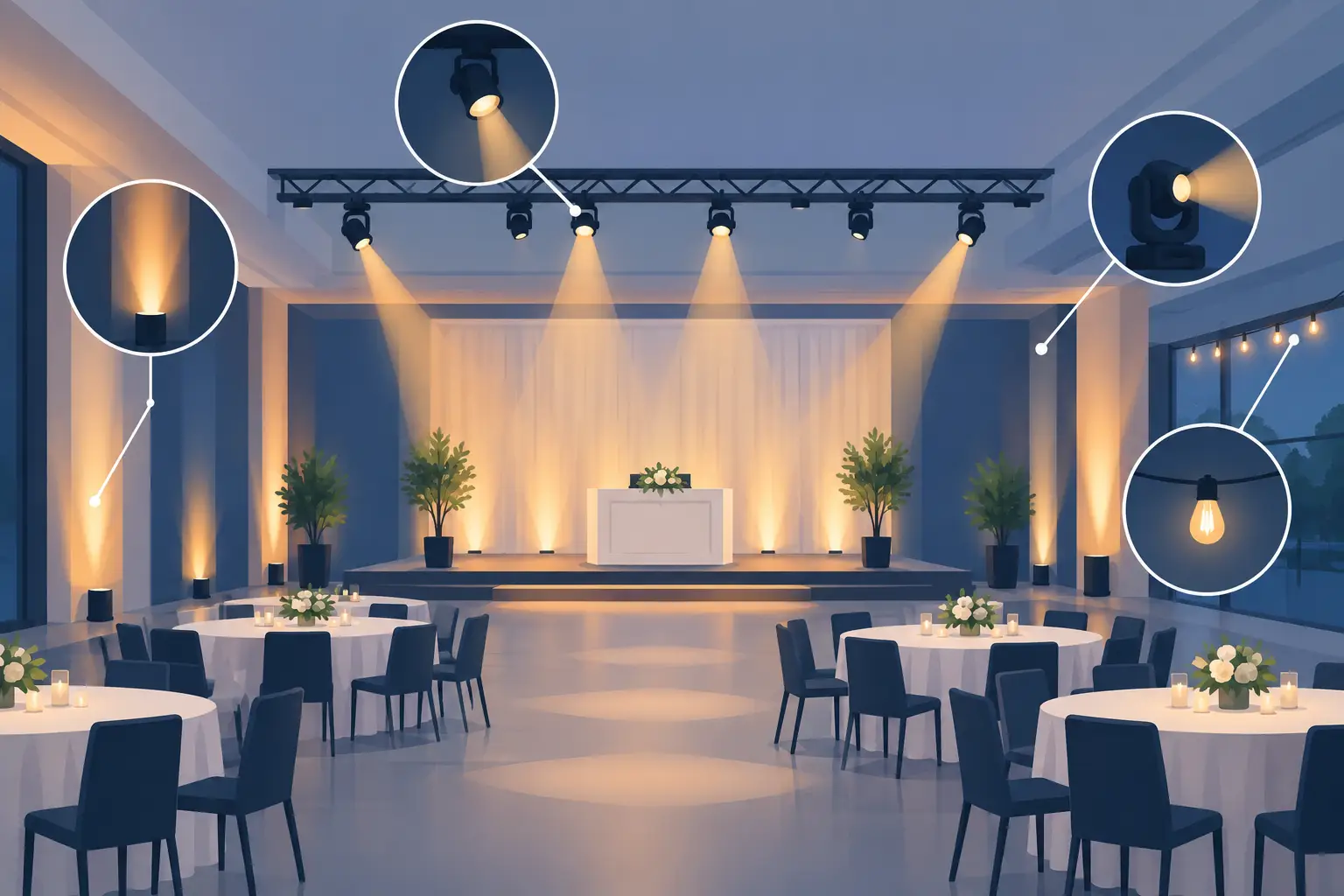
A beautiful venue can feel unfinished the moment the sun goes down if guests cannot see where to walk, where to sit, or where the celebration is happening. This event lighting placement guide focuses on the practical decisions that make a wedding, backyard party, church gathering, or corporate event feel welcoming, safe, and well organized.
Lighting is not only decoration. It directs traffic, supports photos and video, highlights the parts of the event you worked hardest to create, and helps guests stay comfortable after dark. The right placement matters as much as the fixture itself.
Start With How Guests Will Move Through the Event
Before selecting string lights, uplighting, or spotlights, map the guest experience from arrival to departure. Consider where vehicles will park, how guests will enter, where they will check in, eat, gather, dance, and use restrooms. Each area has a different lighting need.
Entry points need enough light for people to recognize the path and greet one another without harsh glare. Walkways, steps, ramps, and changes in elevation should be clearly visible. If your event is under a tent or in an open backyard, this is especially important because familiar spaces can look very different after sunset.
Place functional lighting first, then add decorative layers. A well-lit tent does not help much if the path from the parking area is dark. Likewise, a beautiful dance floor can lose its appeal if guests cannot comfortably find the bar or restroom area.
For larger events, think in zones rather than trying to light the entire property at the same brightness. A parking and arrival zone, a dining zone, a bar zone, a dance zone, and a service zone can each be lit for their purpose. This approach creates a more polished look while helping manage power needs and rental costs.
Event Lighting Placement Guide: Build Light in Layers
The most successful lighting plans combine three layers: ambient light for the overall space, task light for activities, and accent light for atmosphere. When one layer is missing, guests usually notice even if they cannot explain why.
Ambient light for the overall setting
Ambient lighting gives guests their general sense of the room, tent, patio, or outdoor gathering area. String lights hung across a tent ceiling, globe lights over a courtyard, or evenly spaced fixtures around a reception space can provide this foundation.
Keep ambient lights high enough that they do not block sightlines, interfere with tall centerpieces, or become a hazard near walkways. In a tent, overhead lighting often works best when it follows the tent frame or is arranged in a canopy pattern that brings light toward the center without leaving dark edges.
The right brightness depends on the event. A family reunion with buffet service may need brighter overall light than an evening wedding reception focused on dancing and conversation. If dinner, speeches, and activities all happen in the same space, choose a setup that can be adjusted as the event changes.
Task light where people need to see clearly
Task lighting is the workhorse of an event setup. Put it near buffet lines, beverage stations, bars, catering prep areas, registration tables, gift tables, and restrooms. These areas need clear visibility, but they do not need to feel like a commercial kitchen.
For buffet tables, light should come from above or slightly in front of the service area. Avoid placing a bright fixture directly behind guests in line, which can cast their shadows across food labels and serving utensils. Bartenders need enough light to work quickly and safely, while the bar front can remain warmer and more decorative for guests.
Do not overlook staging. Speakers, musicians, officiants, and award recipients should be visible to the audience and to photographers. Front-facing light is generally more flattering than light placed only overhead, which can create strong shadows under the eyes. At the same time, avoid aiming lights directly into the audience.
Accent light for mood and focus
Accent lighting is where the personality of the event comes through. Uplights can define a wall, pipe and drape backdrop, head table, cake display, or ceremony focal point. Pin lights and carefully aimed fixtures can bring attention to floral arrangements, signage, lounge seating, or architectural details.
Use accent lighting with restraint. If every wall, tree, table, and centerpiece has a different color or beam, the space can feel busy and photographs may look inconsistent. A simple color plan usually has more impact: warm white for the main event space, with one or two coordinated colors for uplighting or a focal backdrop.
For weddings, reserve the strongest accent lighting for the ceremony backdrop, sweetheart table, head table, cake, and dance floor. For a corporate event, it may make more sense to highlight the stage, branded backdrop, registration area, and presentation screens.
Place Lighting Around the Key Event Areas
The dance floor needs energy, but it should not become a dark box in the center of the room. Start with enough overhead or perimeter light for guests to enter and exit safely. Then add decorative lighting, color, or movement based on the mood of the event. Keep fixtures outside the main dancing area when possible so cords, stands, and equipment do not become obstacles.
Dining areas benefit from soft, even light. Guests should be able to read a menu, see their food, and talk comfortably across the table. Overly bright downlighting can flatten the room, while lighting that is too dim makes dinner feel inconvenient. If you are using candles, treat them as atmosphere rather than the only source of visibility.
For outdoor spaces, light the boundaries as well as the center. Trees, fences, tent lines, patio edges, and transitions between grass and pavement can help guests understand the shape of the event area. Path lighting should direct people without creating a runway effect. Lower, shielded fixtures usually feel more comfortable than bright lights aimed at eye level.
Photo areas need intentional placement. If you have a backdrop, make sure the faces of guests are lit from the front or side, not only from behind. Backlighting can look dramatic in person but often leaves faces dark in phone photos. Test the setup with a phone camera before guests arrive, since that is how most event memories will be captured.
Plan for Power, Weather, and Safety
A lighting plan only works if the power plan supports it. Confirm where outlets are located, how much power each lighting element requires, and whether a generator is needed for a remote outdoor site. Keep power distribution and extension cords away from high-traffic paths whenever possible.
If cords must cross a walkway, secure and cover them properly. Do not run them loosely through doorways, across dance floors, or near food and drink service. Outdoor connections should be protected from moisture, and fixtures should be suitable for expected weather conditions.
Central Florida events also require a realistic plan for wind, rain, humidity, and changing daylight. Fixtures under a tent may be protected from rain but can still be affected by wind-driven moisture or unstable ground. Build in enough time for setup, testing, and adjustments before guests arrive. A lighting plan should not be finalized by looking at it only in full daylight.
Test the View From a Guest’s Perspective
Walk the property at dusk and again after dark. Start where guests will park and follow the same route they will take. Sit at a dining table, stand at the bar, step onto the dance floor, and look toward the stage. This simple test often reveals glare, shadows, dark corners, and cables that were not obvious during setup.
Ask a few practical questions. Can an older guest see the path clearly? Can a server move through the dining area? Can guests find the restroom without asking? Can a photographer capture the most meaningful moments without using a harsh flash?
Paradise Event Rentals can help coordinate lighting with tents, tables, staging, dance floors, and other rental essentials, so the setup works as one complete event space rather than a collection of separate items.
The best lighting does not call attention to every fixture. It makes guests feel comfortable arriving, confident moving around, and fully present for the moments that matter.