Buffet Equipment for Weddings That Works
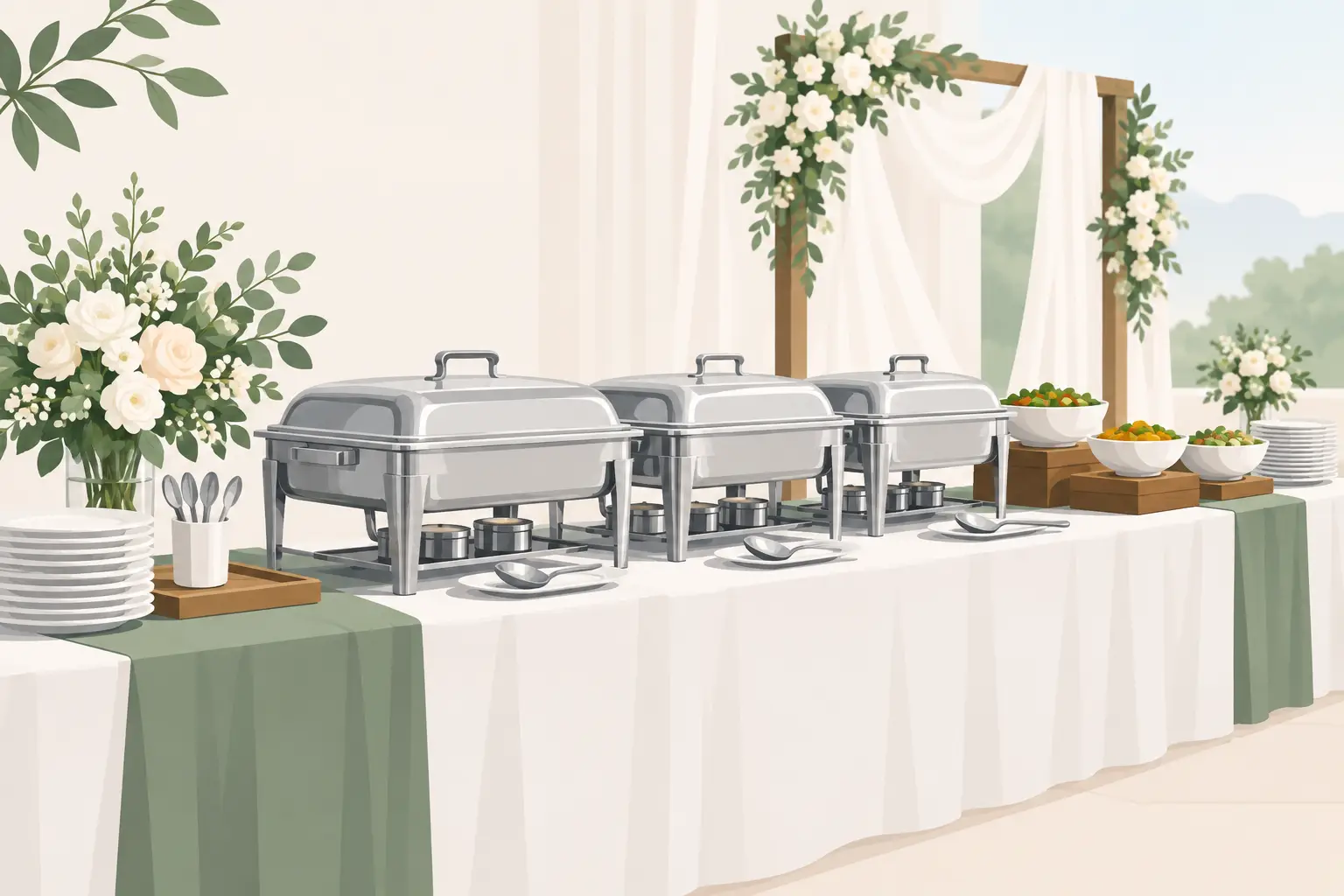
A wedding buffet should feel generous, not crowded. The right buffet equipment for weddings keeps hot food at the right temperature, gives guests a clear place to start, and helps the catering team restock without turning dinner into a traffic jam. It also does more than serve food: the buffet line becomes part of the reception design.
For Central Florida weddings, equipment planning deserves extra attention. Outdoor venues, warm weather, sand, grass, covered patios, and changing guest counts can all affect the setup. A little advance planning helps create a polished meal service without purchasing items you may only use once.
Start With the Menu and Guest Count
The menu should drive the equipment list. A pasta station, carved entrée, taco bar, brunch buffet, or barbecue dinner each needs a different setup. Before choosing chafers or serving pieces, confirm how the caterer plans to serve each item and whether food will arrive hot, chilled, or prepared on-site.
For most wedding buffets, plan for one full-size chafer for every hot entrée or substantial side dish. Half-size chafers work well for smaller portions, sauces, vegetables, and side dishes that may need more frequent replenishing. If you expect a larger crowd, duplicate popular dishes instead of relying on one long line. Two smaller buffet lines often move guests through faster than one oversized line.
Guest count matters, but service timing matters too. If 150 guests are released to the buffet at once, even a well-stocked table can bottleneck. If tables are invited up in groups, a more compact arrangement may work beautifully. Your caterer can help determine food quantities, while your rental plan should make serving practical for the number of guests and the pace of the reception.
Core Buffet Equipment for Weddings
A complete buffet setup usually includes more than chafing dishes. The pieces should work together so guests can serve themselves comfortably and staff can maintain the line throughout dinner.
Chafers, Fuel, and Serving Utensils
Chafing dishes are the workhorses of a hot buffet. They hold hotel pans above gentle heat so entrées and sides remain ready for service. Lids help retain heat and protect food from outdoor conditions, while appropriate serving spoons, tongs, and ladles make each dish easy to serve without spills.
Ask whether the caterer provides food pans, fuel, and utensils, or whether those should be included with the rental order. This detail is easy to overlook when several vendors are involved. For outdoor weddings, make sure lids are available for every dish and that the buffet is positioned away from direct wind when possible.
Tables and Linens
Buffet tables need to be sturdy, level, and long enough to prevent crowding. Standard rectangular banquet tables are flexible because they can be arranged in a straight line, L-shape, U-shape, or separate stations. A head table or sweetheart table may need its own distinct layout, so keep guest dining furniture and food-service tables separate in your floor plan.
Linens make a functional table look reception-ready. Floor-length linens create a more formal finish and hide extra serving supplies stored beneath the table. For a casual coastal wedding, a clean fitted or standard-length linen may be the better fit. The best choice depends on the venue, the dress code, and whether the buffet is a focal point of the room.
Dinnerware, Flatware, and Glassware
Guests need a simple, logical path from plates to food to seating. Place dinner plates at the beginning of the line, followed by flatware either at the end of the buffet or at the guest tables. Putting forks and knives at the beginning can be awkward when guests are holding a full plate.
Rental dinnerware gives a wedding meal a more finished appearance than disposable place settings and can reduce the number of mismatched items a family has to manage afterward. Make sure the order includes salad plates, dessert plates, coffee cups, water glasses, wine glasses, or champagne flutes only where the menu and bar service require them. More pieces create more visual polish, but they also require more space, sorting, and cleanup coordination.
Beverage Stations and Bars
Keep beverages away from the main dinner buffet whenever possible. Water, tea, coffee, cocktails, and soft drinks draw steady traffic, especially during warm Florida receptions. A separate beverage station prevents guests from stopping the food line to refill a drink.
A bar setup may need tables, linens, glassware, ice bins, beverage dispensers, coolers, and crowd-control stanchions depending on the service style. For a self-serve water or tea station, dispensers should sit on a stable table with room for cups, napkins, garnishes, and a small area for drips. It is a small detail that keeps the room cleaner during a busy reception.
Design the Buffet Line for Guest Flow
A beautiful buffet is only useful if guests can approach it, serve themselves, and move on easily. Allow space on both sides of the buffet and leave enough room behind it for catering staff to replenish pans. Avoid placing the line directly beside the dance floor, guestbook, restrooms, or a main entrance.
For a single-sided buffet, guests move down one side of the table. This is simple and works well in smaller spaces. A double-sided buffet can serve more people at once, but it needs wider access and careful placement of duplicate utensils. Separate stations can be even more effective for larger weddings: entrées in one area, salads and bread in another, and desserts or coffee elsewhere.
A basic buffet sequence is plates first, followed by salads or cold dishes, entrées, sides, bread, and sauces. Desserts generally work best after dinner, especially if the wedding cake is part of the presentation. Place signage in front of dishes rather than behind them so guests can identify options before reaching for a serving utensil.
Plan for Outdoor Wedding Conditions
Outdoor receptions are memorable, but they call for practical safeguards. Food tables need a stable, level surface. Grass, pavers, beachside areas, and uneven patios may require flooring, staging, or a tented location to keep tables secure. A level setup is particularly important for beverage dispensers, glassware, and chafing dishes.
Shade can make a meaningful difference for both guest comfort and food presentation. A tent protects the buffet from direct sun and light rain, but it must be sized to leave working room behind the food line. If the wedding takes place in the evening, add enough lighting for guests to read labels and see what they are serving after sunset.
Wind is another consideration near the coast. Use weighted table linens where appropriate, secure signage, keep lids available, and avoid tall decorative pieces that can interfere with service. Décor should enhance the table without blocking guests from seeing food labels or reaching serving utensils.
Do Not Forget the Support Pieces
The most useful rental plans account for the equipment guests notice and the pieces they never see. Extra banquet tables can support bussing, cake cutting, gift storage, catering prep, or a late-night snack station. Trash and recycling containers, bussing tubs, and utility carts help staff keep the reception area orderly.
If your venue has limited kitchen access, caterers may also need prep tables, handwashing stations, power access, or a tented work area. Confirm those needs early. It is far easier to add a support table during planning than to try to create workspace after food has arrived.
Consider these operational details before finalizing your order:
- Who is supplying chafing pans, fuel, ice, serving utensils, and food labels?
- Will the caterer need access behind the buffet for refilling and cleanup?
- Are rental tables, chairs, tents, and buffet pieces being delivered before the caterer arrives?
- Does the venue have restrictions on open flame, cooking equipment, glassware, or tent placement?
Choose a Setup That Matches the Reception
Formal weddings often benefit from coordinated chafers, polished flatware, glassware, full linens, and a carefully styled buffet backdrop. Casual receptions can use a simpler setup while still keeping food protected, organized, and easy to serve. Neither approach is automatically better. The right choice reflects the venue, meal, budget, and the kind of evening you want guests to experience.
Working with one local rental partner can make the logistics easier when your buffet also needs tables, linens, dinnerware, bars, tents, lighting, or dance floor space. Paradise Event Rentals can help couples and planners coordinate the practical pieces around the food service, including delivery and pickup scheduling that fits the event timeline.
When you picture the reception, do not just picture the food. Picture a guest holding a plate, finding the next dish easily, getting a drink without waiting in another line, and returning to the table ready to enjoy the celebration. That is the standard a wedding buffet should meet.