LED Uplighting Versus String Lights for Your Event
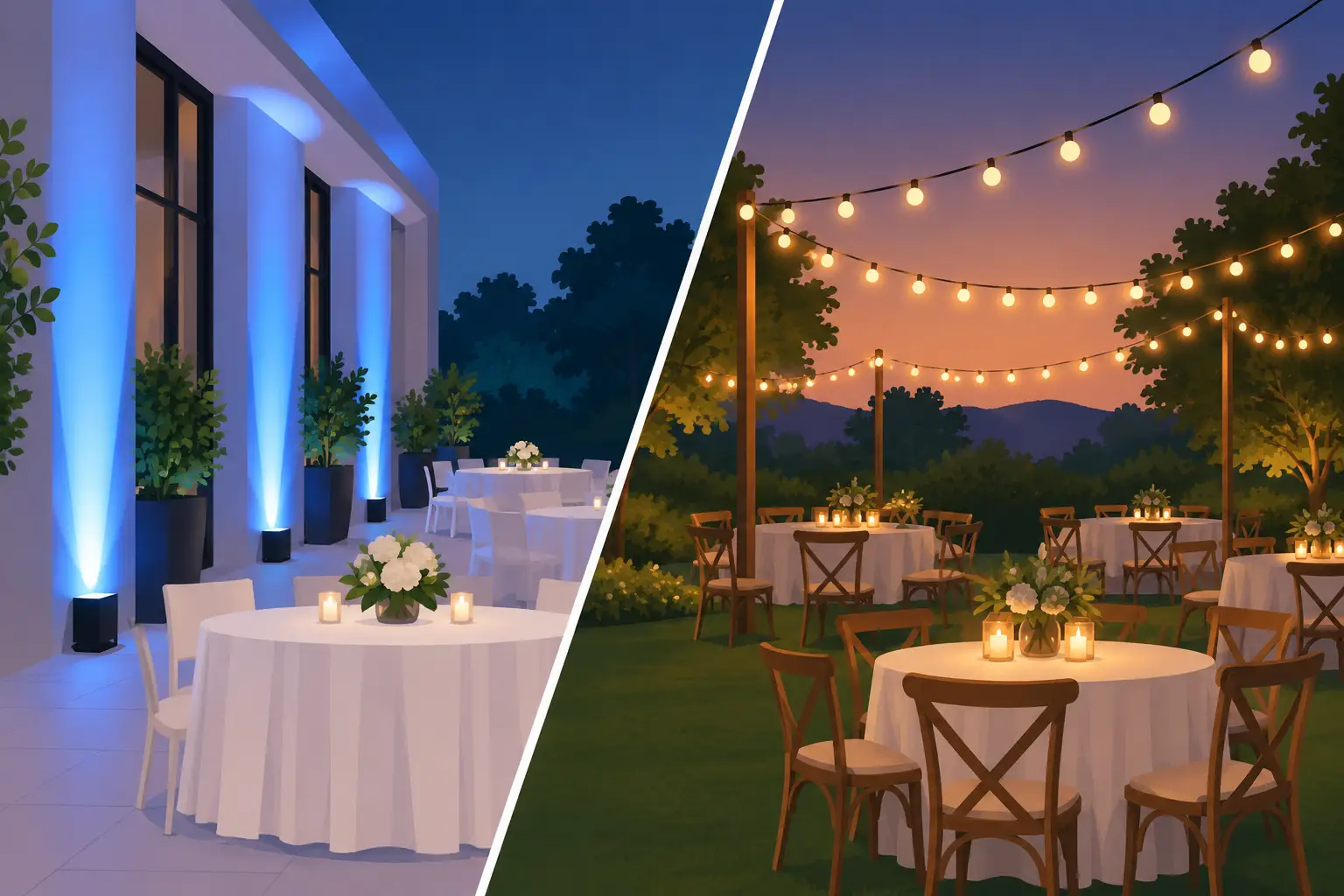
A white tent, a waterfront venue, and a carefully set dinner table can still feel unfinished once the sun goes down. Lighting is what gives the space warmth, depth, and direction. When choosing LED uplighting versus string lights, the better option depends less on which fixture looks best in a photo and more on the atmosphere, venue, schedule, and event layout you need to support.
For weddings, milestone parties, church events, fundraisers, and corporate gatherings across Central Florida, both options can make an ordinary rental setup feel intentional. They simply do different jobs. Understanding those jobs early helps prevent a common event-day problem: a space that is technically lit but does not feel inviting or functional.
LED Uplighting Versus String Lights: The Main Difference
LED uplighting is placed on the ground and aimed upward at walls, tent liners, columns, drape, landscaping, or architectural features. Its purpose is to add color, define the perimeter of a room, and create a polished backdrop. A row of uplights can turn a plain banquet room into a coordinated reception space, or give a tent interior a rich wash of color after dark.
String lights are hung overhead, across open areas, along tent frames, or around patios and gathering spaces. Their purpose is more practical and intimate. They bring light down into the space while creating a soft, festive canopy. Guests can see one another, move between tables, and settle into a relaxed evening atmosphere.
In simple terms, uplighting changes the look of surfaces. String lights shape the feeling of the space people are standing in. Many successful event designs use both, but one may be more valuable if your budget or venue limits the lighting plan.
When LED Uplighting Is the Better Choice
Choose LED uplighting when color and visual impact are priorities. It is especially effective at indoor venues, under tents with sidewalls or liners, behind a head table, around a dance floor, and anywhere a blank wall or pipe-and-drape backdrop needs more presence.
Uplighting works well for couples with a specific wedding palette. Warm amber can create a candlelit feeling without making the room too dark. Blush, lavender, blue, or green can reinforce a theme. For a corporate event, lighting in brand colors can make a stage area, registration wall, or presentation backdrop look organized and professional.
It also gives planners flexibility throughout the event. A room can begin in a softer color during dinner, shift to deeper tones for dancing, or use a focused wash around a speaker or presentation area. That flexibility is useful when one venue must serve several purposes over the course of a long event.
There are trade-offs. Uplighting is accent lighting, not primary task lighting. It will not replace well-placed lighting near food service, bars, walkways, restrooms, stairs, or parking access. If guests are dining outdoors after sunset, uplights alone can leave tabletops and paths too dim. They are most effective when paired with existing venue lighting or another source of overhead light.
Uplighting also needs surfaces to illuminate. In an open backyard, a broad lawn, or a venue with few walls, it has less to work with unless you add tents, drape, columns, trees, or other features that can catch the light.
Best uses for uplighting
LED uplighting is a strong fit for indoor receptions, ballroom events, tented weddings with drape, formal banquets, dance floors, stages, and photo backdrops. It is also a smart choice when you need the room to look transformed without adding a large amount of overhead equipment.
When String Lights Make More Sense
String lights are often the first choice for outdoor celebrations because they make a large area feel gathered together. They are familiar, flattering, and comfortable. Across a backyard, courtyard, patio, or tent ceiling, they help guests understand where the event is happening and encourage them to stay after daylight fades.
For a casual beachside celebration, family reunion, birthday dinner, or rustic wedding reception, warm white string lights can deliver much of the atmosphere without needing a complex design. They work particularly well above dining tables, lounge areas, buffet lines, and dance floors because they provide gentle ambient light where people are spending time.
String lights can also solve a layout issue. A large tent may look empty overhead during the evening. A planned string-light pattern gives the ceiling structure and helps make the tent feel like a finished venue rather than temporary shelter. Over an open outdoor space, lights can visually connect a bar, seating area, and dance floor that might otherwise feel scattered.
The main consideration is installation. String lights need secure, properly placed support points. That may mean tent poles, perimeter frames, approved venue attachment points, or freestanding structures. A professional setup matters, particularly where wind, rain, guest traffic, and electrical routing are concerns. In Central Florida, a plan that looks simple in daylight still has to hold up through changing weather conditions.
They also create a different level of brightness depending on spacing, bulb type, and installation height. String lights can be beautifully soft, but soft light may not be sufficient for detailed tasks. Caterers, bartenders, and guests using steps or uneven walkways may need additional lighting in those specific areas.
Best uses for string lights
String lights are ideal for outdoor dinners, backyard parties, patios, tent interiors, courtyard receptions, casual corporate gatherings, and any event where warmth and guest comfort matter more than bold color effects. They are especially useful when lighting needs to cover a broad area rather than highlight one feature.
How Venue and Event Timing Change the Decision
Start with the setting. An indoor venue with neutral walls, a stage, and a dance floor often benefits more from uplighting because there are natural surfaces to enhance. A tented reception or outdoor event usually benefits from string lights because guests need light from above and across the event footprint.
Next, consider what happens after sunset. A ceremony ending before dark may only need simple transition lighting for cocktail hour and dinner. An event that begins at 6 p.m. in fall or winter may require a complete lighting plan from the start. Do not base the decision solely on daytime site visits. Walk the property mentally after dark, including guest arrival, pathways, parking, restrooms, food service, and departure.
Weather matters as well. Outdoor lighting must be planned around wind, moisture, power access, and stable installation. A tent can provide cover, but it also changes where lights can hang and where extension cords can run. Keeping cords organized and out of walking paths protects the look of the event and helps reduce avoidable hazards.
Budgeting for Lighting Without Losing the Effect
If you must choose one lighting style, spend where guests will feel the result most. For an outdoor dinner under a tent, start with string lights overhead. They support visibility and create the atmosphere guests experience throughout the evening. For an indoor reception with adequate house lighting, uplighting may create a bigger visual upgrade for the investment.
If the budget allows both, use them with separate roles. Put string lights above dining and gathering areas. Use uplights along perimeter walls, behind the head table, around the dance floor, or on pipe and drape. The combination creates layers of light, which makes photos look better and keeps the venue from feeling flat.
Avoid overloading every surface with color or every ceiling line with lights. More fixtures do not always create a better event. A focused design with clear priorities usually looks more polished and is easier to install, operate, and adjust.
Plan Lighting Alongside the Rest of the Setup
Lighting should be considered at the same time as tent size, table layout, staging, drape, dance floors, and catering stations. Moving a bar or adding extra tables later can change cable routes and block light where it is needed. When the layout is planned as one complete setup, lighting supports the event instead of becoming a last-minute add-on.
Paradise Event Rentals can help organizers coordinate lighting with tents, tables, staging, dance floors, and other event essentials, making it easier to build a practical plan around the actual space. Share the event timing, venue details, guest count, and areas that need attention after dark.
The best choice is the one that makes your guests feel comfortable while reinforcing the kind of event you want them to remember. Use string lights to bring people together under a warm glow, use LED uplighting to give the space color and character, and let the venue itself guide the balance.