A Backyard Wedding Rental Example That Works
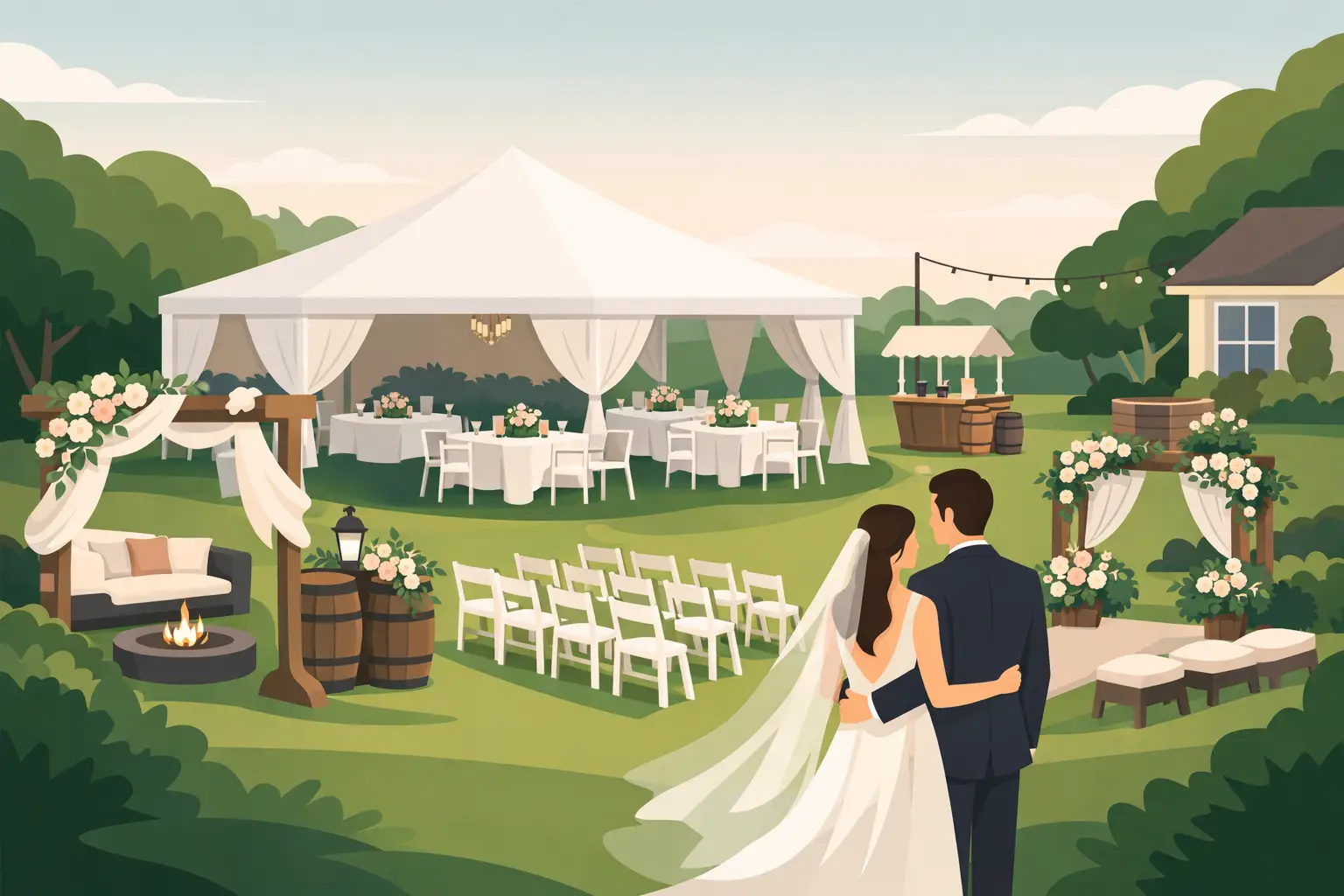
A backyard wedding can feel personal, relaxed, and beautifully tailored to the couple – until the guest count, Florida weather, and dinner service turn a familiar yard into a real event site. This backyard wedding rental example shows what a 75-guest Central Florida wedding may need, why each item matters, and where plans should flex based on the property.
The goal is not to fill the yard with equipment. It is to create a comfortable place for guests to arrive, watch the ceremony, eat, celebrate, and leave safely after dark. A good rental plan starts with the flow of the day, then adds the infrastructure that supports it.
The Event: A 75-Guest Backyard Wedding
Picture a late-afternoon wedding at a family home in New Smyrna Beach or Port Orange. The ceremony begins at 5:30 p.m., followed by cocktails, a plated or buffet dinner, and dancing. The backyard is mostly level but has limited natural shade. Guests will enter through the side yard, and the driveway will be used for vendor access rather than guest seating.
For an event of this size, the rental plan has to cover more than chairs. The backyard needs defined spaces for the ceremony, reception, food service, bar, dancing, and weather protection. It also needs clear walkways so grandparents, children, and guests in dress shoes are not crossing uneven grass all evening.
Ceremony area
For 75 guests, plan for 80 ceremony chairs. The extra five chairs account for an unexpected guest, a photographer or videographer who needs a seat during the ceremony, and a small margin for last-minute changes. White folding chairs are a familiar choice for a garden-style ceremony, while padded chairs can add comfort for a longer program or a more formal look.
A simple 8-foot-by-8-foot or 8-foot-by-12-foot staging area can define the ceremony spot if the couple wants to stand above seated guests. Staging is especially useful when the lawn slopes slightly or the guest list includes many people seated toward the back. It is optional for a short, casual ceremony on level ground, but it improves sightlines without requiring a large structure.
A small sound system is worth considering when the ceremony has more than a few rows of guests. One wireless microphone for the officiant and a speaker positioned toward the seating area can prevent the most meaningful part of the day from being lost to wind, traffic, or backyard noise.
Backyard Wedding Rental Example: Reception Setup
After the ceremony, the same lawn has to support dinner and dancing without feeling crowded. For 75 guests, a common starting point is nine 60-inch round tables seating eight people each, plus one additional table for the couple, wedding party, family, or a guestbook display. Depending on the preferred layout, 6-foot or 8-foot rectangular tables can also be used for family-style seating, a head table, or buffet service.
For seating, rent about 80 to 85 reception chairs. Ceremony chairs can often be moved and reused for dinner, but that only works when there is enough time and help between the ceremony and cocktail hour. If the schedule is tight, separate ceremony and reception seating may be the less stressful choice.
Linens make mismatched tables look intentional and protect tables during food and drink service. The right size depends on the table style and whether the couple wants a floor-length formal look or a shorter, more casual drop. It helps to choose linens after confirming table dimensions, not before.
The couple may also need a 6-foot table for gifts and cards, a 6-foot or 8-foot table for the cake, and two to three buffet tables if food is being served on-site. A separate beverage station keeps guests from crowding the bar and gives water, tea, or coffee its own place.
A tent is the weather plan, not an afterthought
In Central Florida, a tent can provide shade during a warm afternoon and a backup plan for a passing shower. For 75 guests seated at rounds, a 30-foot-by-60-foot tent is often a practical starting point. It can accommodate dining tables and chairs, though the exact layout determines whether there is room for a dance floor, buffet, or bar beneath it as well.
Some couples choose a tent large enough for the entire reception. Others use a smaller tent for dining and place the dance floor or cocktail space under the open sky. The second option can feel more spacious and may lower the rental total, but it leaves part of the celebration exposed to rain.
Tent selection depends on usable yard dimensions, overhead trees, fences, sprinkler lines, and surface conditions. A professional site review or accurate measurements can prevent a tent that looks right on paper from becoming difficult to install. It is also wise to ask whether the tent will be staked or weighted, especially around patios, driveways, or underground utilities.
Food, Beverage, and Guest Comfort
For a buffet dinner, plan for three 8-foot banquet tables: one for entrees, one for sides, and one for desserts or beverages. Add chafing dishes, serving utensils, and food pans if the caterer is not supplying them. A plated dinner requires less buffet equipment but may need additional staging space for caterers to organize plates before service.
A 6-foot or 8-foot bar table with a bar setup gives drinks a dedicated home. For a 75-person wedding, one service point is usually enough for beer, wine, and a signature cocktail. If full bar service is planned or guests arrive all at once after the ceremony, a larger bar or second beverage station can reduce the wait.
Dinnerware, flatware, glassware, and coffee service are easy details to overlook when hosting at home. Renting place settings can give the meal a more polished presentation and eliminate the need to buy, wash, and store supplies after the wedding. The right quantities should include a small overage for breakage, dropped items, and second drinks.
Restroom access deserves the same attention as the tables. A home may be suitable for a small gathering, but 75 guests using indoor bathrooms throughout an evening can create traffic and wear on the house. Depending on the property and event length, a restroom trailer or portable restroom solution may be the more comfortable option.
Lighting, Flooring, and the Parts Guests Notice Late
Backyard weddings change after sunset. String lighting beneath a tent, café lights over a patio, or uplighting around key areas can make the reception feel welcoming while helping guests see where they are walking. Path lighting is particularly helpful between the parking area, house, restrooms, and tent.
A 12-foot-by-12-foot dance floor is a good fit for many weddings with 75 guests. Not everyone dances at once, so there is rarely a need to size a dance floor for the full guest list. A 15-foot-by-15-foot floor may be the better fit when dancing is a major part of the evening, the wedding party is large, or a band needs a defined performance area nearby.
If the lawn is soft, uneven, or likely to be wet, consider flooring for high-traffic areas. Even a short walkway from the house to the tent can make a difference for guests wearing heels and for caterers carrying trays. This is one of those details that may not show in every photo, but it changes how easily the event operates.
Build the Plan Around the Property
A backyard is not a blank event venue. Measure the usable space, including setbacks from pools, fences, landscaping, and utility equipment. Keep room for tent installation, catering access, delivery vehicles, and a clear emergency path. If guests will park on-site, confirm that parking does not block vendors or create a difficult exit after dark.
Also check local requirements, neighborhood rules, and noise expectations before finalizing entertainment and event hours. A backyard wedding may need fewer formal approvals than a public venue, but tents, amplified music, parking, and late-night activity can still affect the plan.
A full-service rental partner can help translate a guest count and a yard sketch into a workable order. Paradise Event Rentals supports Central Florida celebrations with tents, tables, chairs, linens, bars, dance floors, lighting, catering supplies, and delivery options that keep the planning process in one place.
The best backyard weddings still feel like home, just better prepared. Give guests shade, a comfortable seat, a clear path, and a place to celebrate, and the personal setting can do the rest.