How to Rent Event Staging Without Surprises
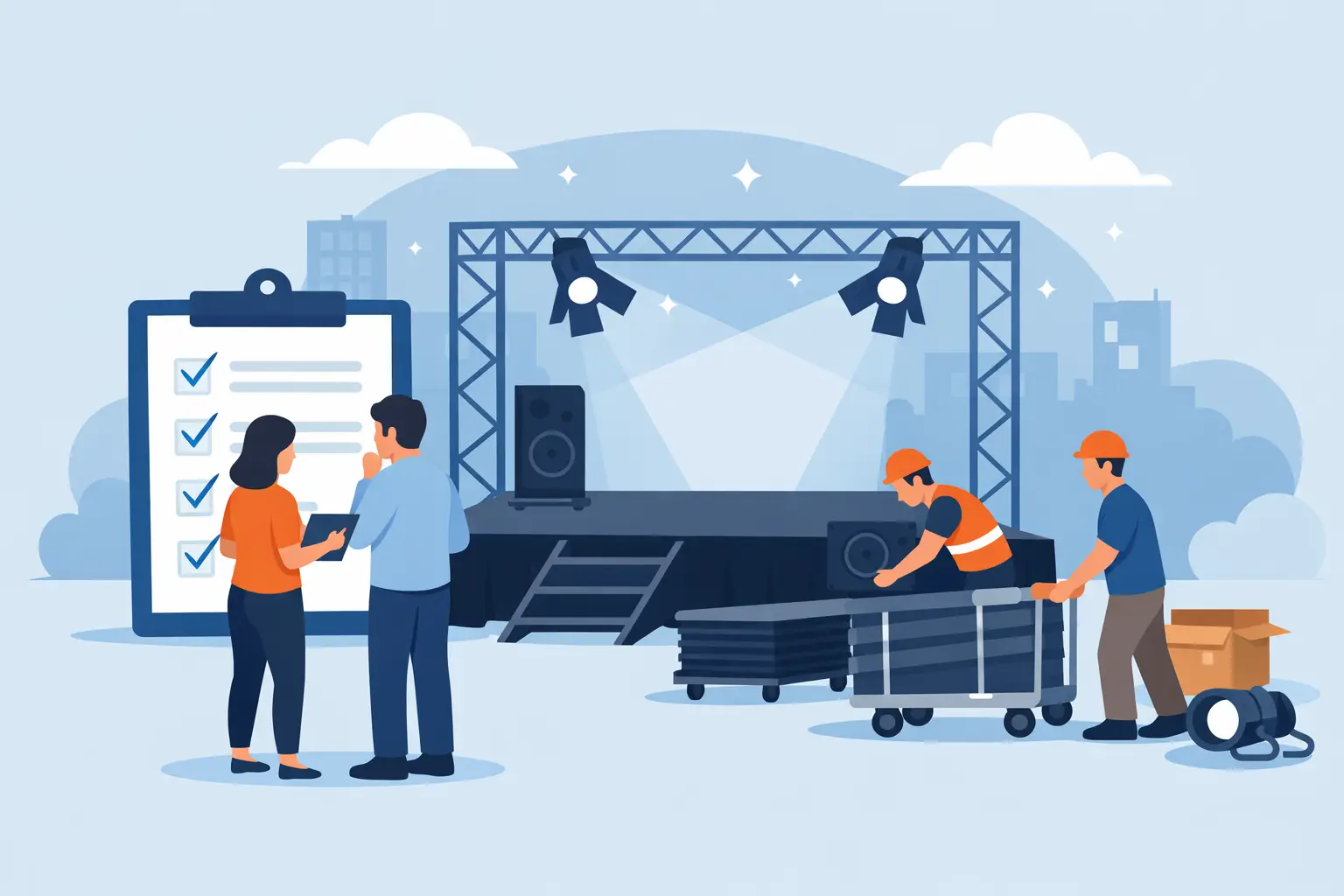
A stage is not just a raised platform. It determines whether guests can see a wedding toast, hear a church speaker, follow an awards presentation, or safely watch a band. Knowing how to rent event staging before you request a quote helps you choose the right footprint, height, access, and support services without paying for equipment that does not fit the event.
For events across New Smyrna Beach, Edgewater, Oak Hill, Port Orange, and Daytona Beach, the best staging plan starts with the program, not the product photo. A backyard graduation ceremony has different needs than a waterfront wedding, a church conference, or a corporate event with audio-visual equipment. A rental partner should help match the stage to the space, audience, and schedule.
Start With What Will Happen on the Stage
Before choosing dimensions, write down what the stage needs to hold at its busiest moment. A speaker at a podium needs far less room than a four-piece band, a head table, or a panel discussion with six chairs. Consider movement, too. A presenter may need room to walk, while performers need clear space around microphones, instruments, monitors, and cables.
Also decide whether the stage is for visibility, performance, ceremony, or equipment. That purpose affects nearly every choice that follows. A low platform can define a ceremony area, while a larger, taller stage may be necessary for a crowd at a community festival or company presentation.
When planning the usable space, leave a margin around people and equipment. A stage that fits the band exactly on paper will feel crowded once instrument cases, microphone stands, speakers, and cords arrive. This is one area where a slightly larger setup can prevent a lot of day-of adjustments.
Choose the Right Stage Size and Height
Stage size is usually described by width and depth. A compact 8-by-8-foot platform may work for a single speaker, cake display, or small ceremony focal point. A 12-by-16-foot or 16-by-16-foot stage may be more appropriate for a DJ setup, panel, small band, or wedding party. Larger organized events often require a custom layout built from multiple staging sections.
Height depends on sightlines and safety. For an intimate indoor gathering, a low stage can create definition without making speakers feel distant from the audience. For an outdoor event with rows of guests, a higher platform may improve visibility. Higher is not always better, though. More height can require steps, guardrails, skirting, and additional attention to access.
Think about who needs to use the stage. If children, older guests, speakers carrying materials, or performers moving equipment will be climbing up and down, stairs should be stable and easy to navigate. For public events, accessibility needs may also affect the plan. Discuss ramps, handrails, and entry points early rather than treating them as last-minute additions.
Consider the audience layout
A stage cannot solve every visibility problem by itself. Seating layout matters just as much. Guests seated behind tall centerpieces, under a tent with support poles, or far off to one side may still have limited views. Pairing the stage plan with chairs, tent placement, lighting, and audio equipment creates a more functional event space.
For larger crowds, ask where the first row will sit and how far the last row will be from the stage. If the audience is spread wide, video screens or additional audio may be more useful than simply increasing stage height.
Inspect the Site Before You Rent
The event location determines whether staging can be installed safely and efficiently. Indoor ballrooms, church halls, driveways, lawns, patios, pavilions, beachside spaces, and festival grounds all present different conditions.
A firm, level surface is the easiest starting point. Grass can work well, but the ground should be reasonably dry and stable. Soft soil, slopes, uneven pavers, sand, or areas with poor drainage may need a different layout or additional preparation. Never assume a beautiful outdoor location is automatically ready for a stage.
Measure the available area, including room for stairs and for installers to work. Check gates, doorways, elevators, narrow walkways, and any distance from the unloading area to the setup location. If staging needs to go inside a tent, confirm the tent size and placement first. Building the stage before finalizing the tent layout can create expensive space conflicts.
Central Florida weather deserves special attention. Heat, afternoon rain, wind, and wet ground can change an outdoor event quickly. A tent may protect presenters and equipment, but it needs to be sized and positioned correctly around the stage. If your event includes electrical equipment, coordinate power access and cable routing so cords do not create trip hazards.
Ask What Is Included in the Rental
Staging rentals can include more than platform sections. The quote may need stairs, rails, skirting, ramps, leveling components, delivery, installation, breakdown, and pickup. Clarifying these details prevents the common surprise of receiving a platform that is functional but incomplete for the way you plan to use it.
Ask whether setup is included and who is responsible for positioning the stage. Professional installation is especially valuable for multi-level configurations, elevated stages, public events, and setups that combine lighting, sound, pipe and drape, or tents. It saves time and gives you a clear point of contact if site conditions change.
Skirting is another small detail with a major visual effect. It creates a finished appearance by covering the stage frame and any stored cables or equipment beneath it. For weddings, galas, church services, and corporate events, ask about color options that coordinate with linens, drape, and the overall event design.
Coordinate Staging With Audio, Lighting, and Power
A good stage without adequate sound can leave guests straining to hear. A speaker standing on a platform at sunset may also need lighting long before the event feels dark. Treat staging as part of the larger production plan rather than a separate rental category.
Share your run of show with the rental team. Let them know if you need a podium, microphone stands, speakers, a projector, a DJ table, dance floor, pipe and drape backdrop, or stage lighting. The equipment can then be arranged with practical access points and safe cable paths.
For live music, confirm where performers will place speakers and monitors. For presentations, consider where the presenter will stand in relation to the screen. A projection screen behind a speaker may look clean, but the setup needs enough depth to avoid crowding and to keep equipment out of sight where possible.
Plan Delivery Around Your Event Timeline
Delivery timing is part of the staging decision. Larger setups take time to unload, assemble, inspect, and coordinate with other vendors. A wedding venue may have a limited access window. A church may need staging installed after services. A neighborhood event may require setup before roads become busy.
Give the rental provider the event date, venue address, setup window, event start and end times, and any venue rules when you request a quote. Mention stairs, loading restrictions, security check-in, parking limitations, and whether someone will be on site to approve placement.
Paradise Event Rentals can coordinate staging with other event essentials, including tents, seating, lighting, dance floors, and audio-video equipment. Working from one plan helps reduce the chance that separate deliveries compete for the same space or arrive in the wrong order.
Book Early, Then Confirm the Details
Staging availability can tighten during busy wedding months, holiday weekends, graduation season, and major community event dates. Reserve early when the stage is central to the event, especially if you need a specific size, elevated height, or a full production setup.
A few days before delivery, reconfirm the site contact, placement location, schedule, and weather plan. If the guest count, program, or venue layout has changed, tell the rental company as soon as possible. Small adjustments are usually easier to make before equipment is loaded and delivered.
The right stage should feel like a dependable part of the event, not another problem to manage. Give your rental team a clear picture of the program and site, and they can help build a setup that lets every guest see what matters.