Round Versus Rectangular Event Tables Compared
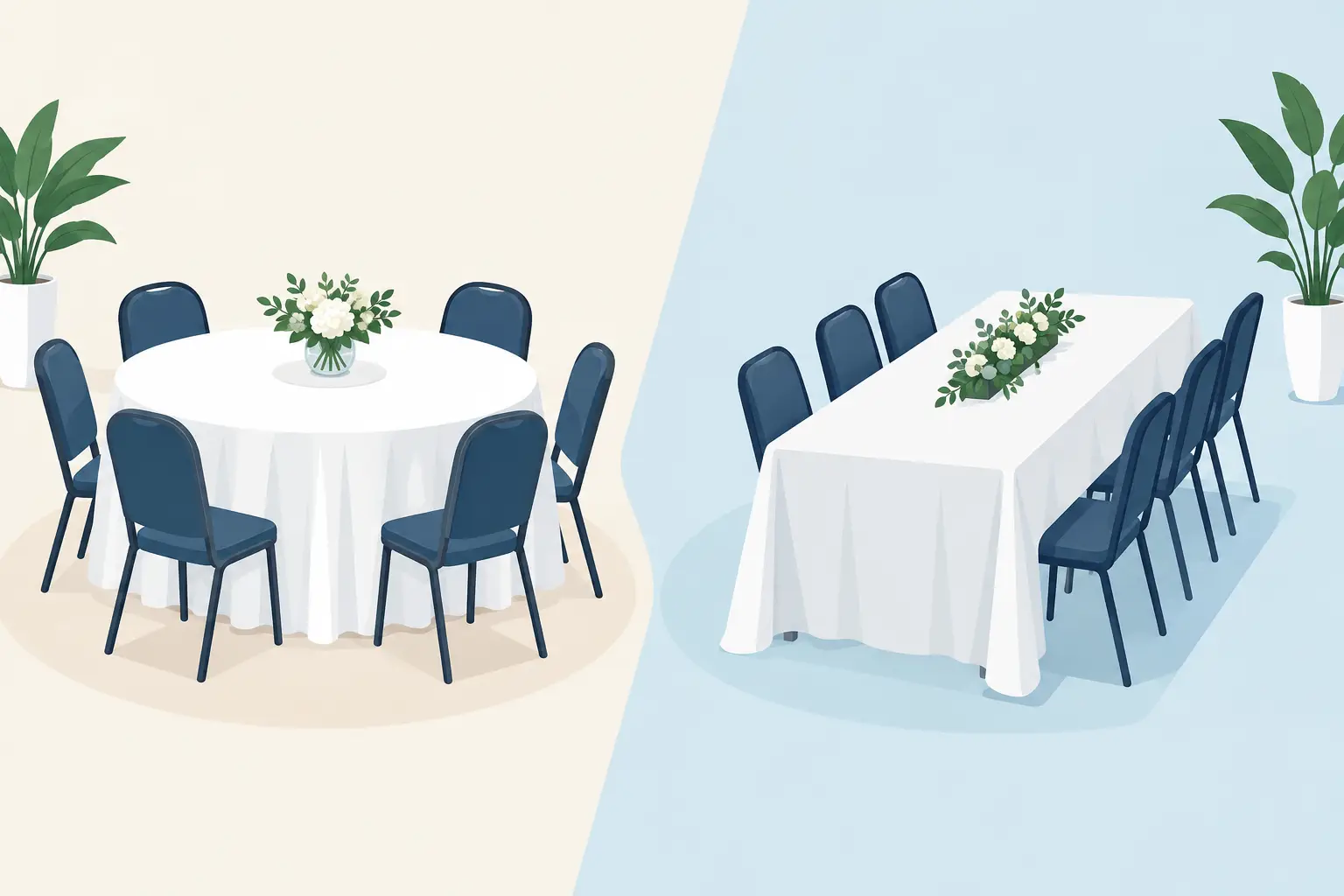
A table choice changes more than the floor plan. When comparing round versus rectangular event tables, you are deciding how guests will talk, how food service will move, how the room will photograph, and how comfortably your guest count fits under a tent or inside a venue.
There is no single right answer for every Central Florida event. A round table can make a wedding reception feel warm and social, while rectangular tables may be the practical choice for a church dinner, corporate luncheon, backyard celebration, or long family-style meal. The best option depends on your space, guest list, service style, and the atmosphere you want to create.
Round versus rectangular event tables: the main difference
Round tables are designed for conversation. Guests face one another naturally, which makes them a familiar choice for receptions, anniversary parties, banquets, and seated celebrations. A standard 60-inch round table commonly seats eight guests comfortably, with room for place settings, glassware, centerpieces, and serving space.
Rectangular tables are more flexible in layout. They can run end to end for long dining rows, fit neatly along a wall, create a head table, or be arranged into squares, U-shapes, and classroom-style seating. Their straight edges make efficient use of narrower rooms, patios, community halls, and tented spaces where every foot matters.
The visual effect is different, too. Round tables break up a room and create softer traffic patterns. Rectangular tables add clean lines and can feel either polished and formal or relaxed and communal, depending on the linens, chairs, and décor around them.
When round tables are the better fit
Round tables work especially well when the event is centered on a seated meal and guest interaction. At a wedding, guests can see and speak with everyone at their table without repeatedly turning their chairs. For milestone birthdays, reunions, and charity dinners, that easier conversation helps the room feel more connected.
They also give a ballroom, banquet room, or open tent a balanced look. Spacing rounds across the floor leaves natural aisles between tables, which can make it easier for servers to move and for guests to reach the dance floor, bar, buffet, or restrooms. If your layout includes a central dance floor, rounds often frame it well without making the room feel overly rigid.
Round tables are forgiving when guests arrive in groups that do not divide evenly. A few tables of eight and a few tables of six can look intentional, especially when linen sizes and centerpieces remain consistent. That flexibility can be helpful when final RSVPs change close to the event date.
There are trade-offs. Rounds need more open floor area than many people expect, particularly once chairs are pulled out. They can also leave unused pockets of space near walls or tent legs. A large centerpiece may block sightlines across the table, so lower floral arrangements or slimmer centerpiece designs are often more comfortable for guests.
Best uses for round tables
Choose rounds when you want a traditional reception layout, relaxed table conversation, or a softer visual feel. They are often a strong choice for weddings, formal dinners, awards banquets, and celebrations where guests will remain seated for a significant portion of the event.
When rectangular tables make more sense
Rectangular tables are often the practical workhorses of event planning. They are easy to place, easy to combine, and easy to adapt if the venue dimensions are tight. A 6-foot or 8-foot rectangular table can serve as guest seating, a buffet, a gift table, a dessert display, a registration station, or a vendor workspace. For events that need several functions from the same rental inventory, that versatility matters.
For dining, rectangular tables are ideal when you want a family-style or communal setup. Long rows encourage guests to share serving dishes, pass platters, and mingle with the people beside them. They can create an inviting look for rehearsal dinners, farm-style weddings, church gatherings, neighborhood events, and outdoor celebrations.
They are also a smart option for meetings and operational events. Training sessions, board meetings, workshops, vendor check-in areas, and classroom layouts all benefit from straight table lines. Guests have a clear work surface for materials, meals, or laptops, and organizers can build aisles that are simple to manage.
The downside is that seating at the ends can be less comfortable if space is limited. Long rows can also make conversation harder for guests seated several seats apart. If you use rectangular tables for a dinner, leave enough room between rows for chairs, servers, and guests walking through the space. The table itself may fit, but the event will not feel comfortable if there is no circulation room around it.
Best uses for rectangular tables
Rectangular tables are a dependable choice for narrow venues, backyard events, buffet service, business functions, classroom seating, vendor areas, and communal dining. They are also useful when you need to maximize usable space under a tent.
Start with the room, not the table style
The easiest way to avoid a crowded layout is to begin with the usable event area. Measure the room, patio, pavilion, or tent footprint, then account for doors, restrooms, kitchen access, columns, tent poles, landscaping, and areas that must stay clear. A floor plan should also include space for the bar, buffet, cake table, gift table, dance floor, staging, and audio equipment if needed.
Then consider the guest experience. A seated dinner needs more aisle space than a drop-in open house. A buffet needs a clear approach and exit path. A wedding with a dance floor needs room for people to leave their tables without creating a traffic jam around it. If guests include older adults, children, or anyone using mobility equipment, wider routes are especially valuable.
This is where mixing table styles can be a practical solution. Use rounds for guest dining, rectangular tables for food service and gifts, and a separate rectangular head table or sweetheart table for the wedding party. For a corporate event, rectangular tables may handle registration and catering while rounds create a more comfortable lunch or networking area.
Seating capacity is not the whole calculation
A table’s maximum capacity is not always its best capacity. You may be able to fit more chairs around a round table, but place settings, chargers, centerpieces, and elbow room can make that arrangement feel tight. The same applies to rectangular tables, especially if you plan to seat guests on both sides and use the ends.
Think about what will be on the table. A plated dinner with multiple glasses and formal place settings needs more room than a casual dessert reception. Family-style food service needs even more surface area. For a cocktail-style gathering, you may need fewer seated tables overall but more standing-height tables to give guests a place to set down drinks and plates.
Children’s tables are another exception. Smaller rectangular tables can work well for younger guests, activity stations, or a kids’ meal area. They are easy to supervise and simple to position away from the main serving lanes.
Linens and décor can change the decision
Your linen plan may point you toward one table shape over another. Round linens create a classic, finished look with an even drape on all sides. They are especially effective with formal place settings, florals, and candlelight. Rectangular linens can look clean and tailored, while runners, greenery, and repeating centerpieces can emphasize the length of a communal table.
Do not choose a table only because a centerpiece idea looks good online. Tall arrangements, wide chargers, elaborate place settings, and full-length linens all affect how much table space and floor space you need. A more detailed tabletop design may call for fewer seats per table, even if your original guest count says more chairs could fit.
For outdoor events near New Smyrna Beach, Edgewater, Oak Hill, Port Orange, or Daytona Beach, factor in wind and surface conditions as well. A stable layout, properly sized linens, and clear paths become even more important on grass, pavers, or uneven ground.
Make the final choice based on how guests will use the space
If your priority is connection at each table, start with rounds. If your priority is efficient use of a long or narrow area, start with rectangular tables. If your event needs both a comfortable seated meal and several support stations, use each shape where it performs best.
Paradise Event Rentals can help planners match tables, chairs, linens, tents, and service areas to the way an event will actually operate. A quick conversation about guest count, venue dimensions, meal service, and setup timing can prevent a layout problem before delivery day.
The best table plan is the one that gives guests enough room to sit, eat, move, and enjoy the occasion without noticing the logistics at all.