Portable Evaporative Cooler for Outdoor Events
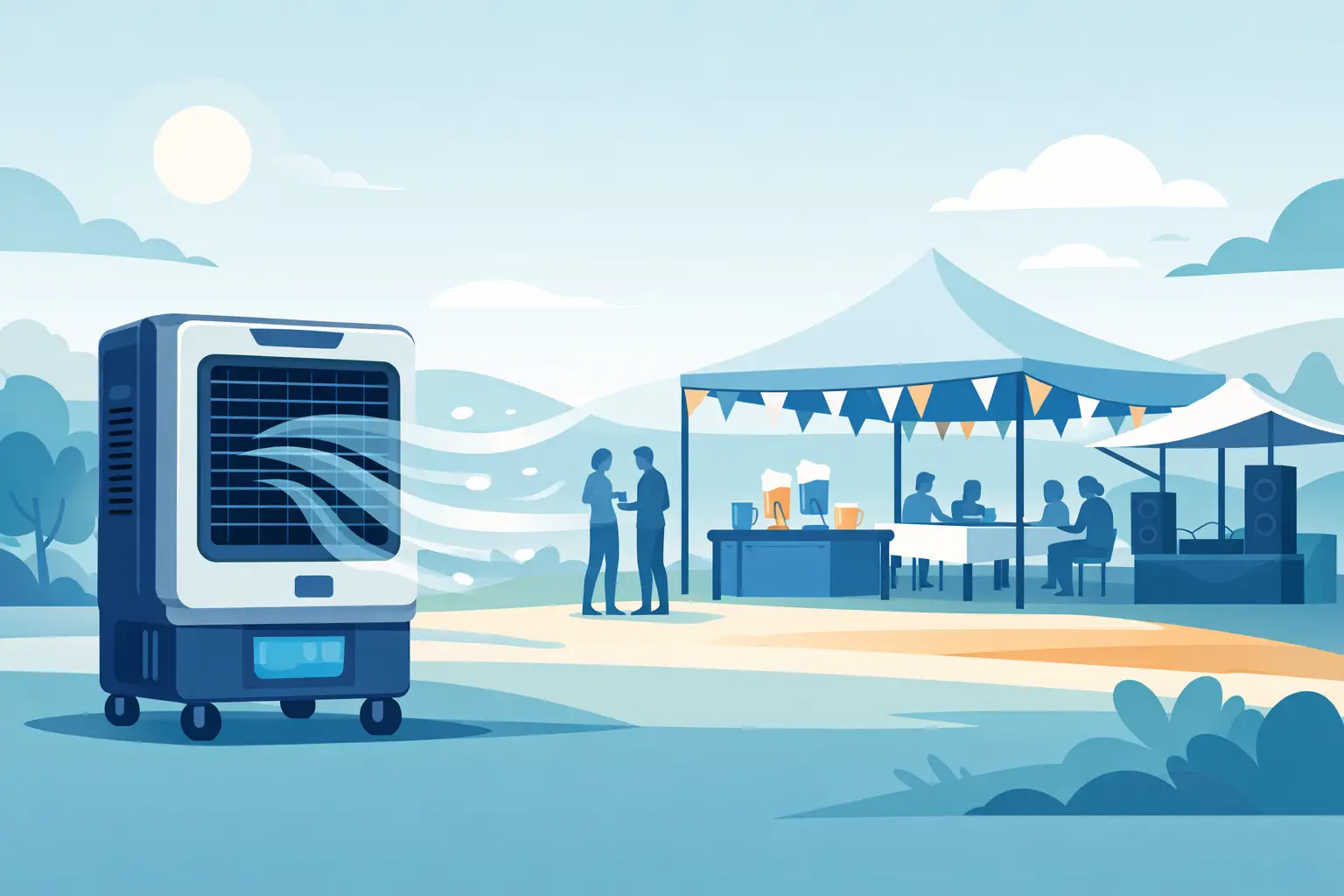
A portable evaporative cooler can make a real difference when guests are gathering outside on a hot Central Florida afternoon. It is not a replacement for air conditioning, and it will not turn a tent into a cold indoor room. Used in the right setting, though, it can improve comfort around seating, food service, registration tables, bars, and other guest areas where people tend to linger.
For hosts planning a wedding, birthday, church function, company event, or community gathering, the goal is simple: reduce heat stress without adding unnecessary complications. That starts with understanding what this equipment does, where it performs best, and how to build it into the event layout.
How a Portable Evaporative Cooler Works
An evaporative cooler pulls warm air through water-saturated cooling media and blows out air that feels cooler because of evaporation. The unit needs a steady water supply, electrical power for the fan and pump, and enough open airflow to do its job.
This is why placement matters more than many people expect. A cooler works best in an open-sided tent, covered patio, pavilion, garage with doors open, or shaded outdoor area. It can move a noticeable stream of cooler-feeling air toward guests, but it needs room for that air to circulate rather than trapping it in a tightly enclosed space.
Unlike a traditional air conditioner, an evaporative cooler adds moisture to the air. That is helpful in dry climates, but Central Florida humidity changes the equation. On a humid day, the temperature drop may be more modest. Guests can still benefit from the moving air and direct cooling effect, especially in shade, but expectations should be practical.
When an Evaporative Cooler Makes Sense for an Event
A portable evaporative cooler is most useful when guests are exposed to heat in a defined outdoor zone. Think of an afternoon ceremony waiting area, a casual backyard party, a buffet line beneath a canopy, or a tented reception with open sides. It is also useful for event staff working at check-in, catering stations, audio equipment areas, and other places where people remain in one spot.
It is less effective when the event space is fully enclosed, crowded with no ventilation, or open to strong winds. Wind can carry the cooled air away before guests feel much benefit. In a sealed room, added humidity can make the space feel stuffier rather than more comfortable.
Time of day matters, too. A cooler positioned for a 2 p.m. outdoor reception may be valuable, while the same unit may be unnecessary after sunset. For longer events, plan around the hottest period rather than assuming every area needs the same level of cooling all day.
Choose the Right Size for the Area
Bigger is not automatically better. A large unit may move more air, but it also takes up more floor space, uses more water, and may require a dedicated electrical circuit. The right choice depends on the size of the guest area, the openness of the space, the expected heat, and how close guests can sit or stand to the airflow.
For a small gathering, one unit aimed across a shaded seating or serving area may be enough. A larger tented event may need several cooling points instead of one machine placed in the middle. Splitting coverage often works better because it gives guests options and reduces the chance of a single crowded area blocking airflow.
Consider the event layout before deciding on equipment. Dining tables, a dance floor, a ceremony aisle, catering access, and exits all compete for space. A cooler should never create a tripping hazard, restrict a walkway, or force guests to stand near cords and water lines.
Start With the Guest Experience
Place cooling where people wait, eat, drink, and sit. A unit pointed toward an empty edge of a tent is wasted capacity. In many setups, it is better to cool a lounge area or buffet queue than try to cover the entire footprint equally.
Keep airflow clear. Tall pipe and drape, solid tent walls, stacked décor, or large equipment placed directly in front of the unit can limit its reach. If the unit has adjustable louvers, direct air across the guest zone rather than straight down at the ground.
Also consider noise. Most portable units produce fan sound, which may be acceptable near a bar or dining area but distracting beside a ceremony microphone, speaker podium, or intimate head table. For formal events, plan the cooling layout alongside the sound and seating plan.
Water, Power, and Site Preparation
An evaporative cooler is straightforward equipment, but it should not be treated as plug-and-play at the last minute. It needs dependable power and enough water for the expected run time. Some units have internal reservoirs that must be refilled; others may connect to a water source depending on the model and site arrangement.
Before event day, confirm where the cooler will sit, how it will be powered, and who will check its water level. Outdoor extension cords should be rated for the job, routed away from walkways, and secured so they do not become a hazard. Avoid sharing a circuit with high-demand equipment such as catering warmers, coffee makers, sound systems, or lighting unless the power load has been reviewed.
Water management deserves equal attention. Set the unit on stable, level ground and keep the surrounding surface clear. If the event is on grass, pavers, or a patio, make sure the location will remain firm if the ground gets wet. Never position the cooler where dripping, splash, or drainage could affect electrical connections, food service, or guest seating.
For events under a tent, keep sides open where weather allows. The unit needs fresh air, and guests need a path for humidity and warm air to leave the space. If rain is a concern, a well-planned tent layout with proper sidewall use is usually more effective than closing every side and expecting the cooler to solve the heat.
Pair Cooling With Shade and Smart Layouts
Cooling equipment works best as part of a larger comfort plan. Shade is the first line of defense. A tent, canopy, pavilion, or shaded patio reduces direct sun exposure before a cooler has to do any work. Light-colored linens, accessible cold beverages, and seating away from heat-reflecting surfaces can further improve how the area feels.
For larger events, create a clear comfort zone rather than trying to cool every square foot. A shaded lounge with seating, water, and moving air gives older guests, children, and anyone needing a break a reliable place to reset. It is a practical feature that guests remember, especially during summer celebrations.
If the forecast calls for extreme heat, use more than one approach. Fans can improve air movement without adding moisture, while evaporative cooling can provide direct relief in the areas where airflow is most needed. In a fully enclosed room, traditional air conditioning is generally the better choice.
Questions to Settle Before Event Day
A quick site review prevents most problems. Confirm these details before the equipment is delivered or placed:
- Is the target area open enough for airflow, or will walls and décor trap heat and humidity?
- Is there reliable electrical service close to the planned location?
- How will the unit be filled, monitored, and refilled during the event?
- Will cords, water, and equipment placement remain clear of guests, exits, catering traffic, and the dance floor?
- Does the layout include shade and seating so guests have a comfortable place to cool down?
For a complicated setup, coordinate the cooling plan with the tent, tables, staging, lighting, and catering layout at the same time. Paradise Event Rentals can help planners think through the practical site details that affect guest flow and event comfort.
A portable evaporative cooler is most valuable when it is placed with purpose, not simply added to a hot event. Give it shade, power, water, and room to move air, then aim it at the people who need it most. That kind of planning helps guests stay comfortable and lets everyone focus on the reason they gathered.