Stage Risers Versus Platforms for Your Event
A speaker who cannot be seen, a band crowded into a corner, or a head table that disappears behind seated guests can change the feel of an otherwise well-planned event. When comparing stage risers versus platforms, the right choice comes down to what needs to be elevated, how many people will use the space, and what guests need to see.
For weddings, church services, awards programs, school functions, and community gatherings around New Smyrna Beach and the greater Central Florida coast, staging is not just a visual detail. It affects sightlines, safety, accessibility, photography, and the flow of the program. A clear plan before delivery helps the event feel organized from the first announcement to the final photo.
What Is the Difference Between Stage Risers and Platforms?
The terms are often used together, and rental inventory can vary by provider, but there is a practical distinction.
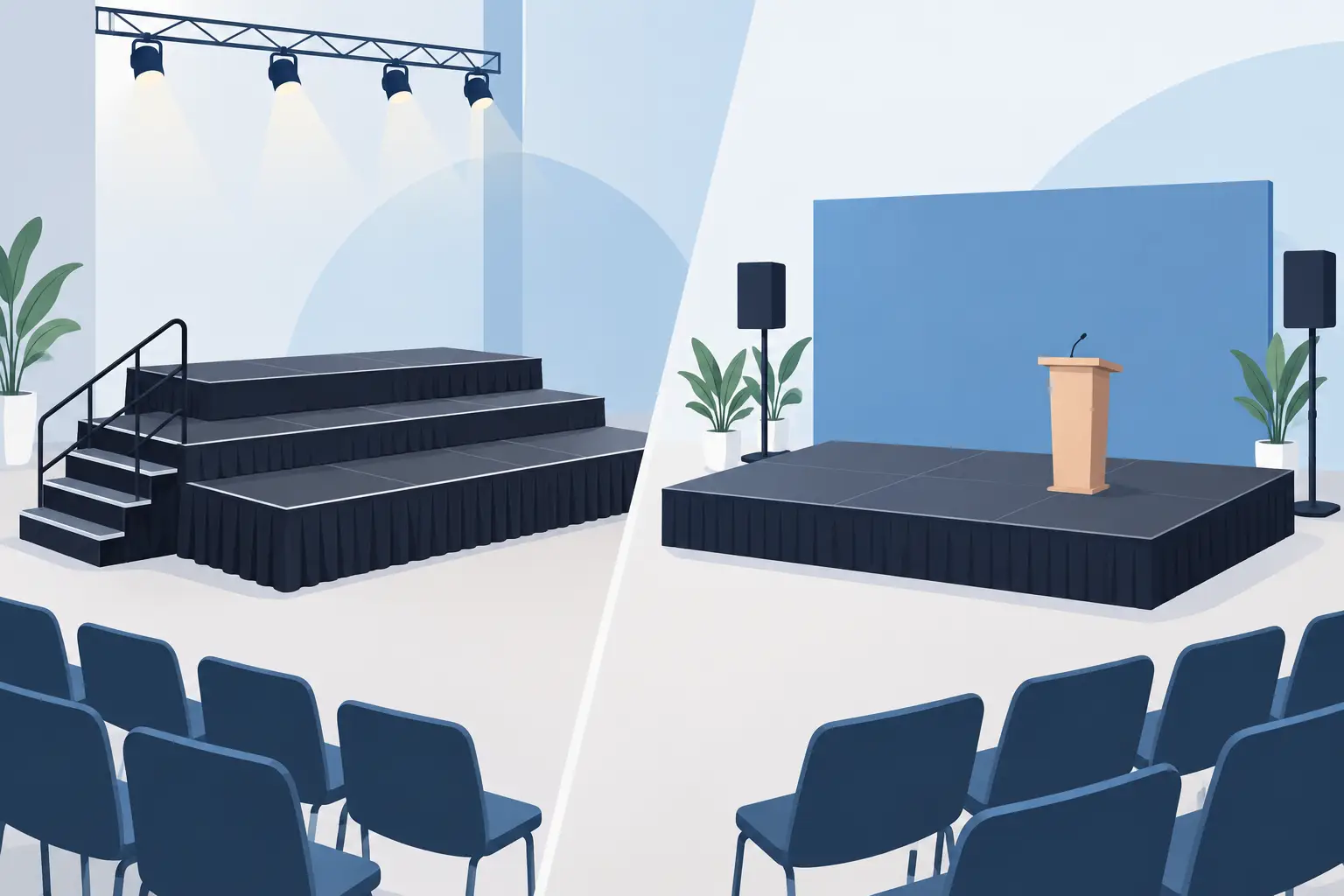
Stage risers are individual elevated sections that can be connected to create a larger stage, runway, choir arrangement, or tiered presentation area. They are especially useful when an event needs flexibility. A small 4-foot-by-8-foot section can become a speaker platform, while several sections can be arranged into a wider performance stage or multiple levels.
Platforms are generally flat, stable deck sections used to create a single elevated surface. In event planning, a platform may refer to one section or a completed staging area. It is often the simpler choice when the goal is straightforward: raise a podium, head table, DJ, band, or presenter above the crowd.
The key question is not which term sounds more formal. It is whether the event needs a simple raised area or a layout that can change shape, height, or level.
When Stage Risers Make More Sense
Stage risers are a strong option when the event involves multiple performers, changing speakers, or an audience that needs better visibility across a wide room or outdoor area. Because risers are modular, they give planners more control over the footprint.
A church choir, for example, may need stepped rows so each singer can be seen. A school recognition program may need a broad stage for graduates, plus a separate raised spot for a podium. A wedding band may need enough depth for instruments, speakers, and cables without placing musicians at floor level among the guests.
Flexible layouts for changing event needs
The biggest advantage of risers is their adaptability. Sections can be arranged in a rectangle, L-shape, T-shape, runway, or tiered configuration. This is helpful for events where the available space is not a perfect square or where the stage must work around a tent pole, dance floor, bar, or existing room features.
Risers also make it easier to build a stage around the actual program rather than forcing the program to fit a fixed stage size. A nonprofit gala may only need space for one speaker during dinner, then need a larger area for entertainment later in the evening. In that case, the staging plan should account for both moments from the start.
Better visibility for groups
If more than one person needs to be seen at once, risers can solve a common problem: people standing behind one another. Tiered heights give performers, choir members, panelists, or award recipients a clearer presence without requiring an oversized single-level stage.
That said, extra height is not automatically better. Stepped configurations require safe access, sufficient lighting, and room for people to move without crowding. They work best when the people using them are comfortable going up and down steps and when the program has been planned with those movements in mind.
When a Platform Is the Better Choice
A platform is often the practical answer for a single focal point. If one officiant, speaker, DJ, or head table needs to stand out, a clean, level elevated surface may be all the event needs.
For a backyard wedding, a modest platform can define the ceremony area and lift the couple just enough for guests in the back rows to see. At a business meeting or fundraising dinner, a podium platform can establish a clear presentation space without taking over the room. For a DJ or small acoustic group, a level platform helps separate equipment from guest traffic and creates a more intentional setup.
Platforms are usually easier to fit into compact spaces because the layout is simple. They can also be a good choice when the event schedule is short and the staging only needs to serve one purpose. If the program does not call for multiple levels or a custom shape, additional riser sections may add complexity without adding real value.
Choose the Size Based on Use, Not Guesswork
A stage that looks adequate on a floor plan can feel very different once people, instruments, lecterns, floral pieces, and audio equipment are added. Start with the people who will be on the staging at the same time, then account for what they need around them.
A solo speaker with a podium needs less room than a three-piece band. A wedding party needs room to stand comfortably without blocking the couple. A panel discussion requires space for chairs, a small table, and safe paths for participants to enter and exit.
For outdoor events, consider the audience distance as well. A small stage can work for an intimate ceremony with 30 guests. A larger gathering under a tent or in an open field may need a wider and taller setup so guests farther back can follow the program. Sightlines matter more than square footage alone.
Height, Access, and Safety Should Be Planned Together
The most useful stage height depends on the venue, guest seating, and purpose of the setup. A low platform may be enough to create definition for a ceremony or presentation. A higher arrangement can improve visibility, but it also requires more attention to stairs, railings, and the ability of presenters to move safely.
Do not treat stairs as an afterthought. If a speaker is carrying notes, an older family member is giving a toast, or children are participating in a ceremony, the access route should be comfortable and well lit. For public events, churches, and corporate functions, accessibility may require a ramp or other accommodations based on the venue and event plan.
Outdoor staging needs an extra review. Florida ground conditions can change quickly after rain, and uneven grass, sand, or soft soil can affect placement. A stable, level base is essential. Tent location, drainage, overhead lighting, power cables, and nearby foot traffic should all be considered before the staging is installed.
Do Not Forget the Finish Around the Stage
The structure is only part of the presentation. Skirting can give risers and platforms a finished appearance while concealing the open area beneath them. Carpet, dance flooring, pipe and drape, uplighting, and coordinated linens can help the stage feel connected to the rest of the event rather than added at the last minute.
For weddings, the ceremony platform may need to complement the arbor, aisle, and reception décor. For a church or corporate program, a clean black skirt and simple backdrop may be the better fit. For a concert, festival, or community event, the priority may be cable management, equipment access, and a clear separation between performers and the audience.
Lighting deserves special attention. A stage that is too dark is difficult to photograph and can create a safety concern at stairs or edges. A stage that is overlit can distract from the speaker or wash out a projected presentation. The best setup supports the program without competing with it.
A Practical Way to Make the Decision
Start by describing the event moment that needs elevation. Is it a ceremony, a speech, a performance, an awards presentation, or a group photo? Then determine how many people and how much equipment will occupy that space at one time.
Next, look at the room or site. Measure the available footprint, note the audience seating plan, and identify entrances, exits, tent lines, and electrical needs. Finally, decide whether the staging must be flexible. If you need tiers, an unusual shape, or multiple performance areas, risers are likely the better fit. If you need one clean, level focal point, a platform may be the smarter and more efficient choice.
Paradise Event Rentals can help planners match staging, stairs, skirting, lighting, seating, tents, and other event essentials to the actual site and schedule. That kind of coordination is particularly helpful when the event setup involves several rental categories or a last-minute layout adjustment.
The best staging choice is the one guests barely have to think about: they can see the important moments, participants can move safely, and the event has a clear place for attention to land.