How Many Tables for Wedding Guests?
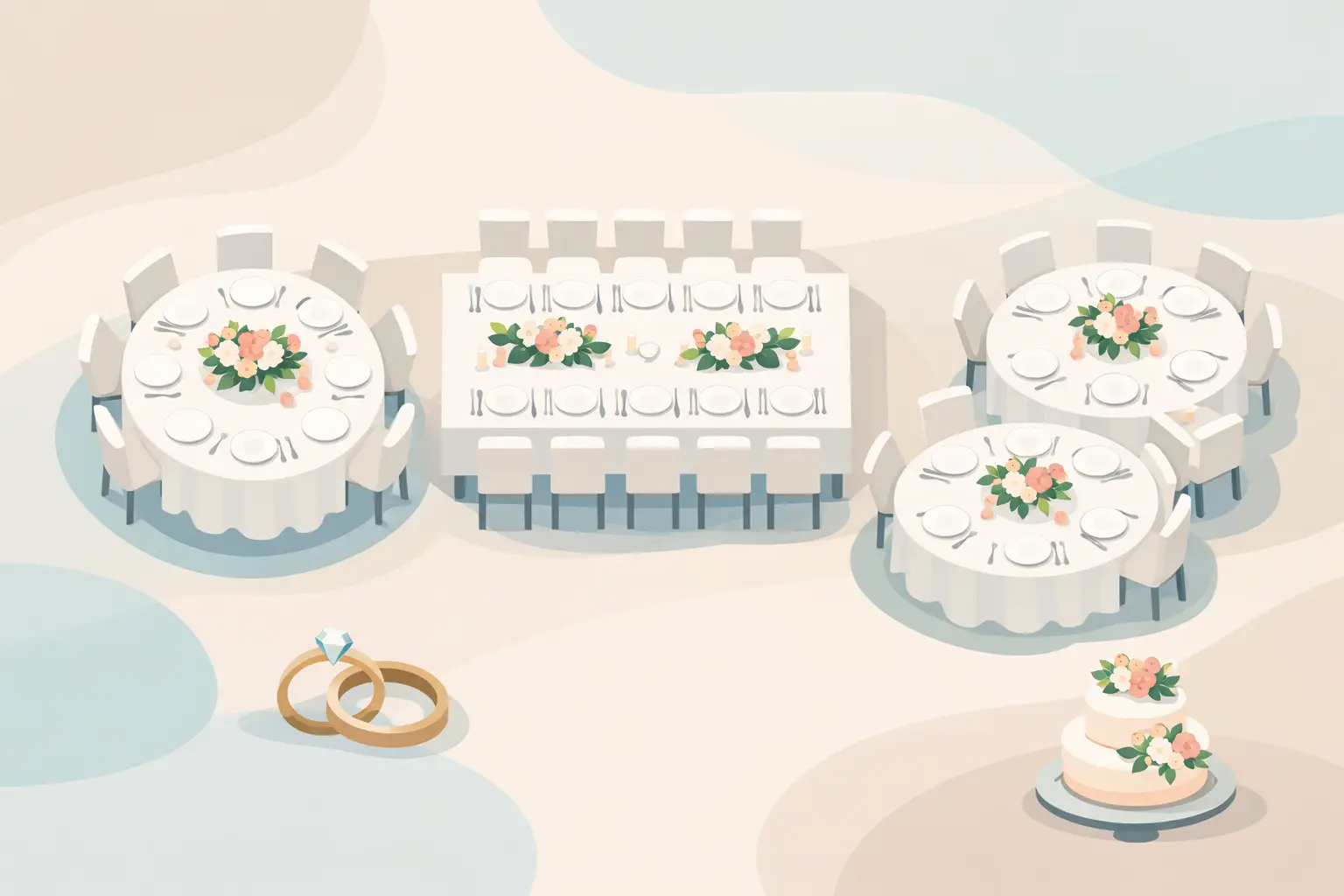
You usually feel this question all at once – right after the guest list starts to look real. One minute you are thinking about colors and centerpieces, and the next you are asking, how many tables for wedding seating do we actually need? It is a practical question, but it affects almost everything else in the reception, from your floor plan to your linen count to how comfortable the room feels once guests sit down.
The short answer is simple: divide your guest count by the number of people you plan to seat at each table, then round up. The part that takes a little more thought is choosing the right table size, shape, and spacing for your venue and your style of reception.
How many tables for wedding planning usually starts
Most couples start with guest count, and that is the right move. If you are inviting 100 guests and planning to seat 8 people per table, you will need about 13 tables. If you seat 10 per table, you will need 10 tables. That math is easy. The better question is whether 8 or 10 is actually the right fit for your event.
Round tables often seat 8 comfortably and 10 a little tighter, depending on the table diameter and place settings. Rectangular banquet tables can work well for family-style seating or long reception layouts, but they change traffic flow and sightlines. If your venue is compact, a tighter seating plan may seem efficient, but it can make service harder and the room feel crowded.
That is why table count should never be based on math alone. It should also reflect how you want the event to function.
A quick formula for how many tables for wedding receptions
A reliable starting point looks like this:
Guest count divided by seats per table = number of guest tables needed
Then add any separate tables for the couple, wedding party, cake, gifts, memory displays, escort cards, favors, buffet service, or DJ equipment if needed. Many receptions need more than just guest seating tables, and those extras are often what make a layout feel tighter than expected.
Here are a few common examples:
- 50 guests at 8 per table = 7 tables
- 75 guests at 8 per table = 10 tables
- 100 guests at 8 per table = 13 tables
- 125 guests at 8 per table = 16 tables
- 150 guests at 8 per table = 19 tables
If you are seating 10 per table instead, the guest table count goes down, but the table itself may need more room around it for chairs and service access.
Round tables vs. rectangular tables
This choice changes more than appearance.
Round tables are the standard for many weddings because they encourage conversation and usually create a balanced, classic reception look. Guests can see each other more easily, and centerpieces often sit neatly in the middle without blocking anyone. They also work well in larger banquet rooms and tented receptions where you want a softer layout.
Rectangular tables can make excellent use of narrow spaces. They are practical for rustic weddings, backyard receptions, and layouts where long rows make better use of the footprint. They also pair well with family-style service. The trade-off is that some guests may feel farther apart from the rest of the table, and spacing between rows matters more.
If you are not sure which way to go, think about your room first and your style second. A beautiful layout still has to work for guests, servers, and vendors moving through the space.
What changes the table count
The reason there is no single answer to how many tables for wedding receptions is that several details can push the number up or down.
Your RSVP count is the biggest factor, but seating style matters right behind it. A plated dinner often needs a little more elbow room than a casual buffet reception. Charger plates, full glassware, bread plates, and formal place settings take up space quickly. If you are planning a more detailed table setup, seating fewer guests per table is often the better call.
Guest comfort matters too. Ten at a round table may fit on paper, but eight can feel noticeably more relaxed. That difference affects conversation, chair spacing, and how easy it is for guests to get in and out without bumping into each other.
Then there is the room itself. A reception under a tent or inside a hall has to leave enough space for walkways, a dance floor, bar service, buffet lines, and vendor access. If the room is doing a lot, your table layout needs to breathe.
Don’t forget the non-guest tables
This is where many layouts get off track. Couples calculate guest tables correctly, then forget how many support tables the reception really needs.
A typical wedding may also include a sweetheart or head table, cake table, gift table, guest book table, favor table, buffet tables, beverage station tables, and tables for DJ or photo booth support. If you are using catering equipment, dessert displays, or specialty stations, those pieces need room too.
In practical terms, a wedding with 12 guest tables might still need 18 to 22 total tables depending on the setup. That is why a full event layout matters more than a seating chart alone.
Space planning matters as much as table count
A crowded room can make even a well-planned wedding feel rushed. People need space to pull out chairs, servers need room to move, and guests should be able to reach the bar, buffet, and dance floor without squeezing between tables.
As a general rule, leave enough clearance around each table for seated guests and walking paths. If your reception includes dancing, expect that the dance floor will take a meaningful share of the layout. The same goes for buffet service, especially if two lines will form at once.
If you are hosting outdoors, remember that tents, poles, catering prep space, and flooring can also affect your usable seating area. On paper, the footprint may look large enough. In practice, rentals and service zones can reduce how much open room you really have.
Sample table counts by wedding size
For a smaller wedding of 50 guests, you may only need 6 to 7 guest tables if using rounds seating 8. That usually leaves enough flexibility for a sweetheart table, cake table, and one or two service tables without making the room feel packed.
For a mid-size wedding of 100 guests, expect around 10 to 13 guest tables depending on whether you seat 10 or 8 per table. This is also the size where layout starts to matter more because the dance floor, bar, and buffet begin competing for space.
For a larger wedding of 150 guests, you may need 15 to 19 guest tables, plus support tables. At that point, table count is only part of the picture. Traffic flow becomes just as important as seating capacity.
When to add one more table
If you are between numbers, it is usually smarter to add a table than to overfill the ones you already have. That extra table can improve comfort, help with family groupings, and reduce the feeling that guests are packed in too tightly.
This is especially true if you have older guests, formal place settings, larger centerpieces, or a reception where people will remain seated for long stretches. A table that looks efficient during setup can feel cramped once dinner service begins.
The same logic applies when you are trying to seat a mix of families, couples, and friend groups. Real seating charts are not always perfectly divisible. Sometimes the best floor plan is not the one with the fewest tables, but the one that gives you more flexibility.
The easiest way to get it right
Start with your confirmed or estimated guest count. Decide whether you want to seat 8 or 10 at rounds, or use banquet tables based on your venue shape. Then count every non-guest table the reception needs before finalizing your layout.
If you are still unsure, it helps to talk through the floor plan with a rental team that handles weddings regularly. A local company like Paradise Event Rentals can usually spot spacing issues before they become setup-day problems, especially when tents, dance floors, linens, catering tables, and guest seating all need to work together.
The right table count does more than seat people. It gives your reception room to function, helps guests feel comfortable, and makes the event easier to manage from setup to the last pickup. If you are deciding between squeezing one less table in or giving the layout a little more room, more breathing space usually wins.