Tent Rain Resistance for Florida Events
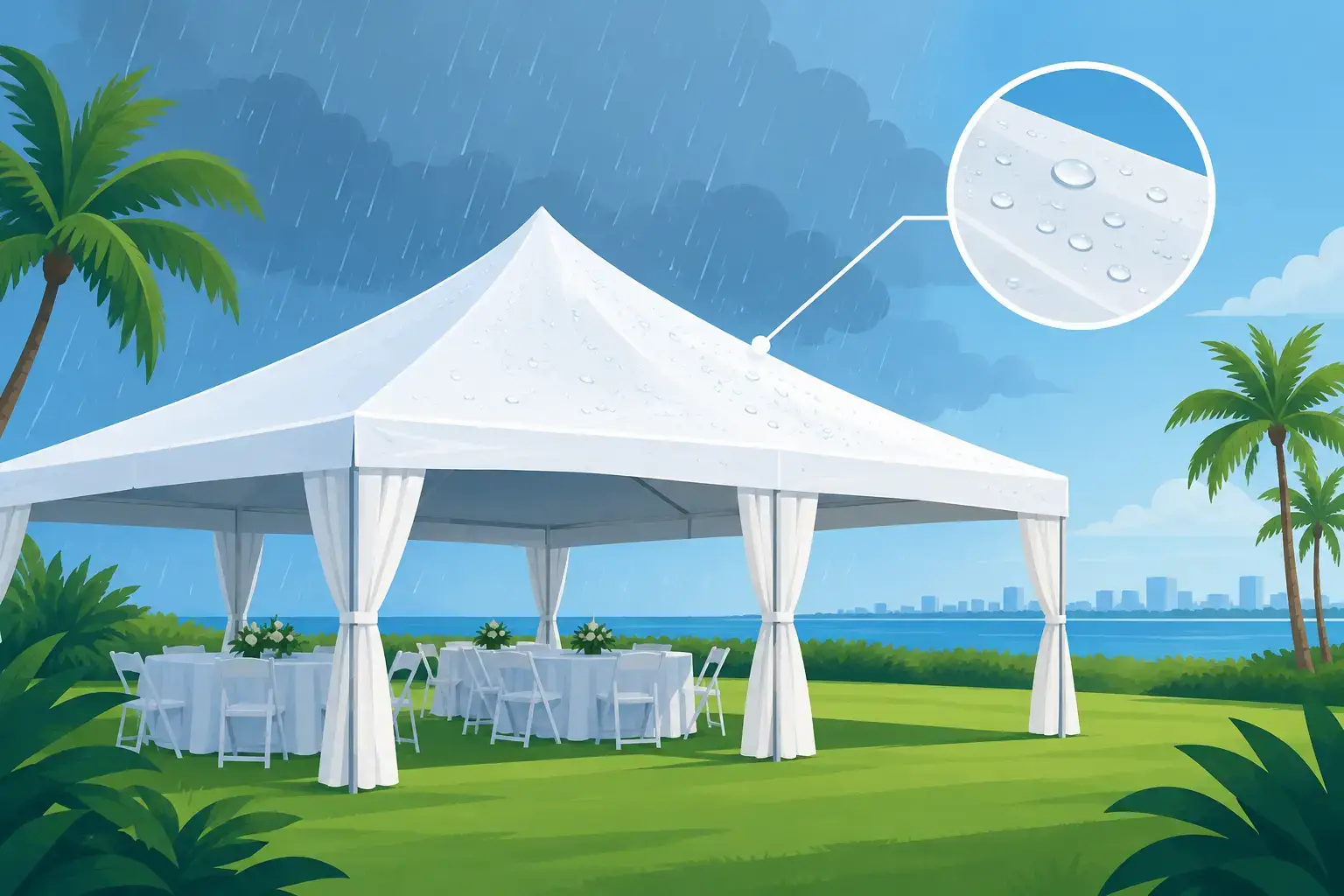
A sunny Central Florida morning can turn into a fast-moving afternoon shower before the first toast or presentation begins. That is why tent rain resistance is not simply a matter of keeping chairs dry. It affects guest comfort, catering, electrical equipment, flooring, event flow, and the backup decisions that keep a wedding, church function, company gathering, or backyard celebration moving forward.
A tent can provide valuable cover from ordinary rain, but no tent should be treated as a guarantee against every weather condition. The right setup depends on the tent style, the event site, the expected guest count, the ground conditions, and whether the event has a workable weather plan. Planning those details early is the easiest way to reduce day-of stress.
What Tent Rain Resistance Really Means
A quality event tent is designed to shed rain across its canopy and away from the covered area. When it is properly installed, the top is tensioned, the frame is stable, and the roof has the shape needed for water to run off rather than collect overhead. That basic performance is what most hosts have in mind when they reserve a tent for an outdoor event.
But rain protection is about more than the roof fabric. Water can enter from open sides, run underneath the tent from higher ground, drip through gaps where tents meet, or splash in from a paved surface. A tent that is adequate for a light shower may need sidewalls, gutters, flooring, or a larger footprint when the forecast calls for steady rain.
The practical question is not just, “Is this tent waterproof?” It is, “How will this specific tent perform at this specific location if it rains during our event?” That is the question that produces a useful setup plan.
Start With the Event Site, Not Just the Guest Count
Guest count helps determine tent size, but the site determines much of the rain risk. Before choosing a layout, consider where water naturally travels across the property. A low spot in a lawn, a sloped driveway, loose sand, or a patio with poor drainage can change the experience under a tent quickly.
For backyard parties, walk the space after a recent rain if possible. Look for puddles, soft turf, roof runoff from the home, and downspouts that may discharge near the tent. For parks, church grounds, and larger event venues, ask the site contact about drainage patterns and any restrictions on staking or equipment placement.
A tent should not be placed where water collects. It should also be kept clear of building runoff, tree limbs, and areas that could become difficult for guests to access when wet. A short walk from parking to the tent can become a muddy path after a storm, so entrance routes deserve as much attention as the tent itself.
Ground Conditions Affect More Than Shoes
Wet grass and soft soil can make table and chair placement less stable, especially with a busy guest list. If food service, a bar, a dance floor, staging, or audio-visual equipment is part of the event, a level and protected surface becomes even more valuable.
Flooring is not necessary for every gathering. For a casual afternoon birthday party, a well-drained lawn may be perfectly practical. For a formal wedding reception, a corporate program, or an event where guests will be in dress shoes and heels, flooring can improve comfort and help define a cleaner, more reliable event area.
Choose Coverage for the Whole Event Flow
One common mistake is reserving enough tent space for seated guests but not for the activities that happen around them. In rainy conditions, guests need room to enter, move between tables, visit the bar, and step away from food service without crowding under the edges of the canopy.
Consider which areas need coverage if rain arrives: guest seating, buffet or catering tables, the bar, the ceremony area, registration, gifts, sound equipment, and the path between major spaces. A smaller tent may cover the main tables, while a separate tent can protect food service or check-in. This arrangement can prevent bottlenecks and keep the main tent more comfortable.
Open-sided tents offer airflow and an easy outdoor feel, which is especially welcome during Florida heat. The trade-off is exposure to wind-driven rain. Sidewalls can add protection, but they also change ventilation and may make the space warmer or more enclosed. For many events, the best approach is to plan sidewalls as a weather option rather than assuming every side must be closed from the start.
Build a Rain Plan Before Setup Day
A weather plan works best when it answers simple operational questions in advance. Where will guests park if the grass is wet? Who will move the ceremony under cover? Where will the caterer work? What happens to speakers, music equipment, or a dessert table if rain begins? When those decisions are made early, the host is not trying to solve them while guests are arriving.
For weddings, a covered ceremony plan is especially helpful. That may mean holding the ceremony under the reception tent, reserving a second tent, or identifying an indoor alternative with enough notice to reset chairs. For community and business events, think through registration, lines, crowd control, and any equipment that cannot get wet.
Keep important items away from tent edges. The center of the tent is generally the most protected place for guest seating, electronics, displays, and food. Leave a practical buffer around the perimeter so rain splash and drips do not disrupt the main setup.
Tent Rain Resistance and Wind Are Different Issues
Rain and wind often arrive together, but they require separate attention. A tent may keep rain off guests during a normal shower while still needing to be monitored for changing wind conditions. Proper anchoring and professional installation matter because tents are temporary structures, not permanent buildings.
Do not alter an installed tent by removing anchors, tying decorations to the frame without approval, or adding sidewalls on your own. These changes can affect the structure and its performance. If the forecast changes, communicate with your rental provider early so the team can discuss available options and site-specific considerations.
There are weather conditions in which an outdoor event needs to pause, move indoors, or follow venue and local safety guidance. No rental item should be used as shelter from lightning or severe weather. A reliable plan includes a clear decision-maker, a way to alert guests, and a safe location away from the tent when conditions require it.
Details That Help Keep Guests Comfortable
A rain-ready tent event feels organized because the small details are covered. Place entrance mats or a hard-surface walkway where guests enter. Keep umbrellas available for transitions between parking and the tent. Position trash containers, beverage stations, and serving tables where staff can access them without crossing muddy areas.
Lighting also matters when storms darken the sky earlier than expected. Tent lighting improves visibility for dining, walking, and cleanup, while properly planned power placement helps protect cords and equipment from wet areas. For evening receptions or programs, lighting should be part of the original layout, not an afterthought once the clouds roll in.
If your event includes linens, select colors and materials with the setting in mind. Light-colored linens can look beautiful, but they may show mud or rain splash more easily near open sides. Keep extra linens or a small service plan available for high-traffic food and beverage areas when appropriate.
Work With a Rental Team That Asks the Right Questions
The best tent recommendation is rarely based on a single measurement. A helpful rental team will ask about the event date, location, guest count, seating style, ground surface, planned equipment, delivery access, and the time available for setup and pickup. Those details help identify whether you need a basic canopy, sidewalls, flooring, lighting, additional covered space, or a more flexible layout.
Paradise Event Rentals helps Central Florida hosts coordinate tents alongside tables, chairs, linens, lighting, staging, bars, and other event essentials. Having one local rental partner for multiple needs can simplify delivery timing and make the overall layout easier to manage.
Rain does not have to cancel the outdoor atmosphere you planned. With the right tent, a well-chosen site, and a clear response plan, your guests can stay focused on the reason they gathered in the first place.