What Size Tent for Wedding Reception?
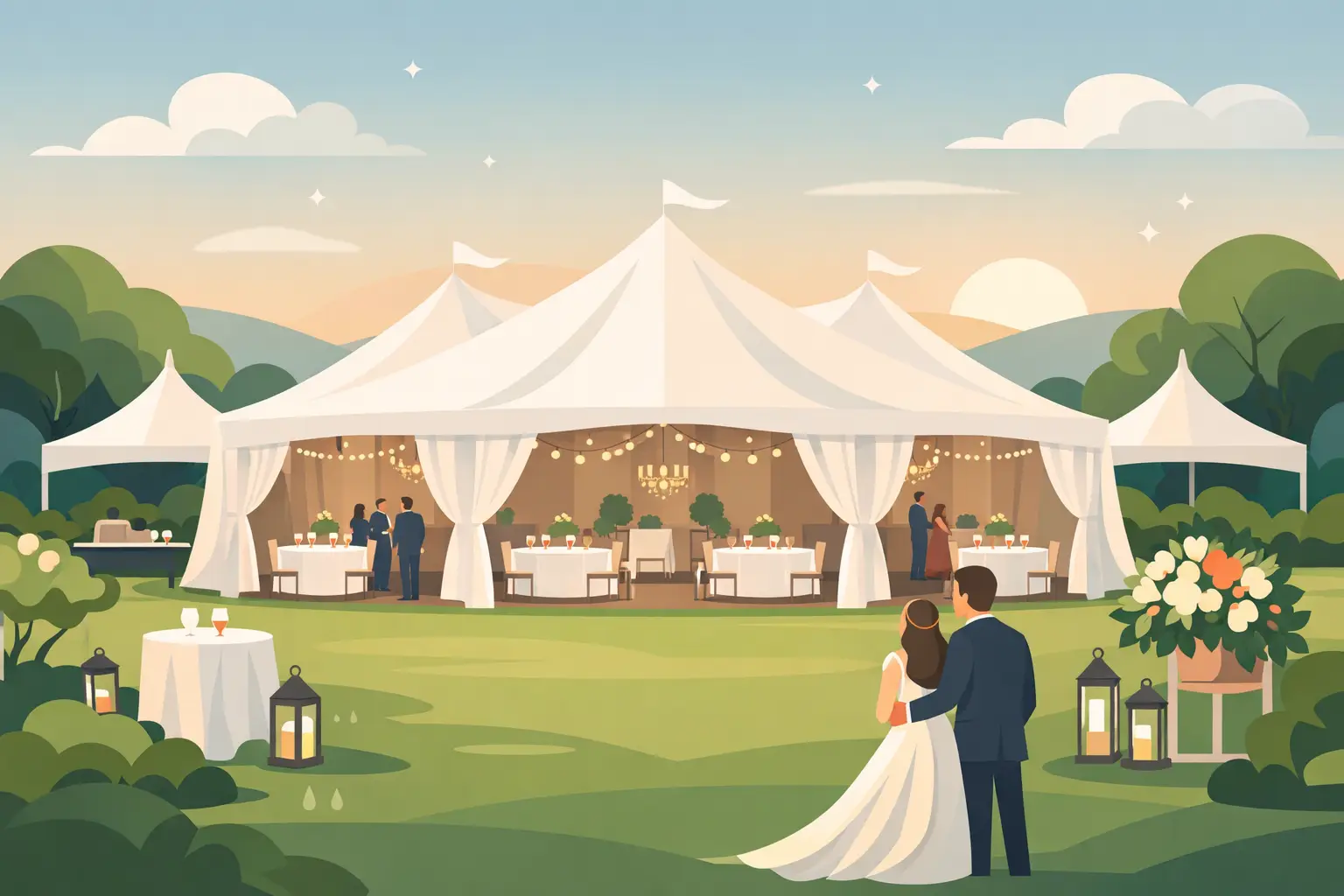
If you are asking what size tent for wedding reception planning, the real question is how much usable space your guests, tables, and vendors will actually need once everything is laid out. A tent can look large on paper and still feel tight once you add dining tables, a dance floor, buffet stations, a bar, and room for people to move comfortably.
That is why tent sizing should start with the reception layout, not just the guest count. A 100-person wedding can fit under very different tent sizes depending on whether you are serving a plated dinner, using round tables, adding a DJ setup, or trying to keep everything under one cover in case of Florida weather.
What size tent for wedding reception events usually need
For most wedding receptions, tent size is driven by four things: guest count, table style, how formal the layout is, and what else needs to fit under the tent besides seating. The biggest mistake couples make is choosing a tent that only covers chairs and tables, then realizing too late they also need space for a dance floor, cake table, sweetheart table, gift table, catering access, and walkways.
As a starting point, a seated dinner with standard round tables often needs about 10 to 15 square feet per guest under the tent. If your setup is tighter and simple, you may be closer to the lower end. If you want generous spacing, added decor, or multiple activity areas, you will need more.
A few common examples help. A reception for 50 guests may work under a 20×40 or 20×60 tent, depending on the layout. Around 100 guests often calls for a 30×60 or 40×60 tent if you want dining space plus some extra room. A 150-guest reception commonly lands in the 40×80 range, and 200 guests may need something closer to 40×100 or larger. These are useful ballpark numbers, but they are not final answers.
Guest count is only the starting point
Two weddings with the same headcount can need very different tent sizes. If one couple is planning a cake-and-punch reception with scattered cocktail tables, the footprint stays relatively small. If another couple wants a full dinner service, large dance floor, buffet line, bar, lounge seating, and photo area, the tent requirement changes fast.
That is why it helps to think in zones. Your guests need a dining zone, but your reception may also need entertainment space, service space, and open circulation. If those zones are all competing for room, the event can feel cramped even if the tent technically holds everyone.
A tighter layout may save money, but it can also affect comfort. Servers need room to move. Guests need to pull out chairs without bumping into the next table. If grandparents, children, and formal attire are part of the day, a little extra breathing room usually pays off.
Table shape changes the footprint
Round tables are popular for wedding receptions because they feel social and photograph well, but they often take more space than banquet-style rectangular tables. If you are using 60-inch round tables with 8 guests each, expect a larger overall footprint than long family-style seating.
Sweetheart tables, cake tables, memory displays, and dessert tables also add up. These pieces seem small individually, but together they can take a meaningful amount of tent space. The cleaner the floor plan, the easier it is to size correctly.
Dance floor, bar, and buffet space matter
A dance floor is one of the biggest space add-ons. If dancing is a major part of the reception, you do not want it squeezed into a corner. The same goes for a bar setup. Guests naturally gather there, so it needs both the bar footprint and standing room around it.
Buffets usually require more room than many couples expect because guests need line space and servers need access. If your caterer is working under the tent, that may add prep or holding tables too. If catering is separate from the guest tent, you may be able to keep the reception tent smaller.
A practical way to estimate tent size
The easiest way to estimate what size tent for wedding reception use makes sense is to build from the inside out. Start with the seating plan, then add each functional area one by one.
For example, imagine 100 guests seated at round tables. That alone may push you toward a mid-size or larger tent. Add a dance floor, DJ table, buffet, bar, and gift table, and you may need the next size up. That larger tent is not wasted space. It is what makes the event feel comfortable and organized.
If you are between tent sizes, the safer move is usually to size up. Weddings rarely shrink on event day. Guest counts may increase, rentals can shift, and weather can force more of the event under cover than originally planned.
Weather and site conditions in Central Florida
Tent planning in coastal Central Florida should always account for weather. Heat, sudden rain, and changing wind conditions all affect how your reception setup should function. If you are planning an outdoor wedding in New Smyrna Beach, Edgewater, Port Orange, or nearby areas, tent size is not just about capacity. It is also about protection and comfort.
A tent that is technically big enough for dining may still fall short if guests need to remain under cover during a rain shower or if sidewalls, fans, or added equipment are part of the plan. Flooring can also affect the footprint, especially on uneven grass or softer ground.
Site shape matters too. A backyard with trees, landscaping, septic areas, or limited access may not fit the tent size you originally wanted. In those cases, the right solution may be a different tent configuration rather than simply choosing a smaller tent and hoping it works.
Different reception styles need different tent sizes
A cocktail-style reception usually needs less tent space per guest than a formal seated dinner. Fewer full-size tables means more flexibility. If your event is mostly mingling with some lounge pieces and high-top tables, you may be able to use a smaller tent than you would for a traditional dinner reception.
A plated dinner tends to be more space-efficient than a buffet when service remains organized and staff can move freely. A buffet adds queueing space, which should be accounted for. Family-style service can also affect table spacing because serving platters and tableware need room.
If you are combining ceremony and reception under one tent, that should be planned from the beginning. Flipping a space from ceremony seating to dinner seating takes labor, time, and often a larger tent than couples expect. It can work well, but only if the transition is realistic.
Why sizing up can be the better value
Many couples look for the smallest tent that can technically fit the reception. That makes sense from a budget standpoint, but the smallest option is not always the best value. A crowded tent can make a wedding feel less polished, less comfortable, and harder for vendors to work in.
A little extra room supports better traffic flow, cleaner table spacing, and a more relaxed guest experience. It also gives you flexibility if the final headcount shifts or if you decide to add details later. In practice, the right tent size often saves stress more than it saves square footage.
That is especially true when you are renting more than just the tent. Tables, chairs, linens, dance floors, staging, lighting, and catering equipment all need to work together. Looking at the full setup as one plan usually leads to a better result than making tent decisions in isolation.
The best way to choose the right size
The most accurate answer comes from sharing your guest count and full reception wish list with a rental team that handles tents and the related event equipment. Once the layout is clear, it becomes much easier to recommend a tent size that fits the event instead of just fitting a number.
At Paradise Event Rentals, that usually means helping customers think through the parts of the reception they may not have counted yet, from bar placement to serving space to weather coverage. That local, practical approach matters because no two properties or wedding plans are exactly the same.
If you are unsure between two tent sizes, ask yourself a simple question: do you want the tent to hold the reception, or do you want it to support it well? For most weddings, that small difference in planning leads to a much better day.