What Rentals Do Catered Events Need for Service?
A catered meal can be beautifully prepared and still feel disorganized if guests have nowhere to sit, buffet lines have no room to move, or the caterer arrives without enough service space. When clients ask, “what rentals do catered events need,” the right answer starts with the food service style, guest count, venue conditions, and how formal the occasion will be. A backyard graduation party needs a different setup than a wedding reception or a corporate luncheon, but the planning priorities are the same: keep food safe, service efficient, and guests comfortable.
Start With the Caterer’s Service Plan
Before choosing rentals, ask the caterer how they plan to serve the meal. A plated dinner requires more table settings and staff pathways than a buffet. A buffet needs serving tables, chafing dishes, food pans, and space for a line that does not block entrances or seating. For cocktail-style events, you may need high-top tables, trays, barware, and a mix of lounge or standing space instead of a chair for every guest.
Get clear answers about what the caterer provides and what they expect the host to rent. Some caterers bring their own chafers, serving utensils, prep tables, and dinnerware. Others focus on the food and staffing, leaving the host or planner to arrange the equipment. Confirming responsibilities early prevents duplicate rentals and last-minute gaps.
Also ask about power, water, and waste. If food needs to be held hot or cold, the caterer may need electrical access or protected prep space. Outdoor locations in New Smyrna Beach, Port Orange, Daytona Beach, Edgewater, and Oak Hill can be great settings, but weather, wind, uneven ground, and limited outlets should be addressed before event day.
The Core Rentals Catered Events Need
Most catered events are built around a few essential rental categories. The exact quantity changes with the guest list and service style, but these items create the foundation for a functional meal.
- Tables and chairs: Guest tables, chairs, cocktail tables, buffet tables, cake or dessert tables, gift tables, and designated prep or bus tables all serve different purposes. Do not assume the venue has enough tables simply because it has seating.
- Linens: Tablecloths, napkins, runners, and chair covers can create a finished look while protecting tables and making mismatched furniture feel coordinated. Choose linen sizes based on table dimensions, not just the number of tables.
- Dinnerware and flatware: Plates, forks, knives, spoons, bowls, chargers, and serving pieces should match the menu. A pasta course, soup station, or dessert bar may require more than a standard plate-and-fork count.
- Glassware and beverage service: Water glasses, iced tea glasses, wine glasses, champagne flutes, coffee cups, beverage dispensers, and ice tubs may be needed depending on the drink menu.
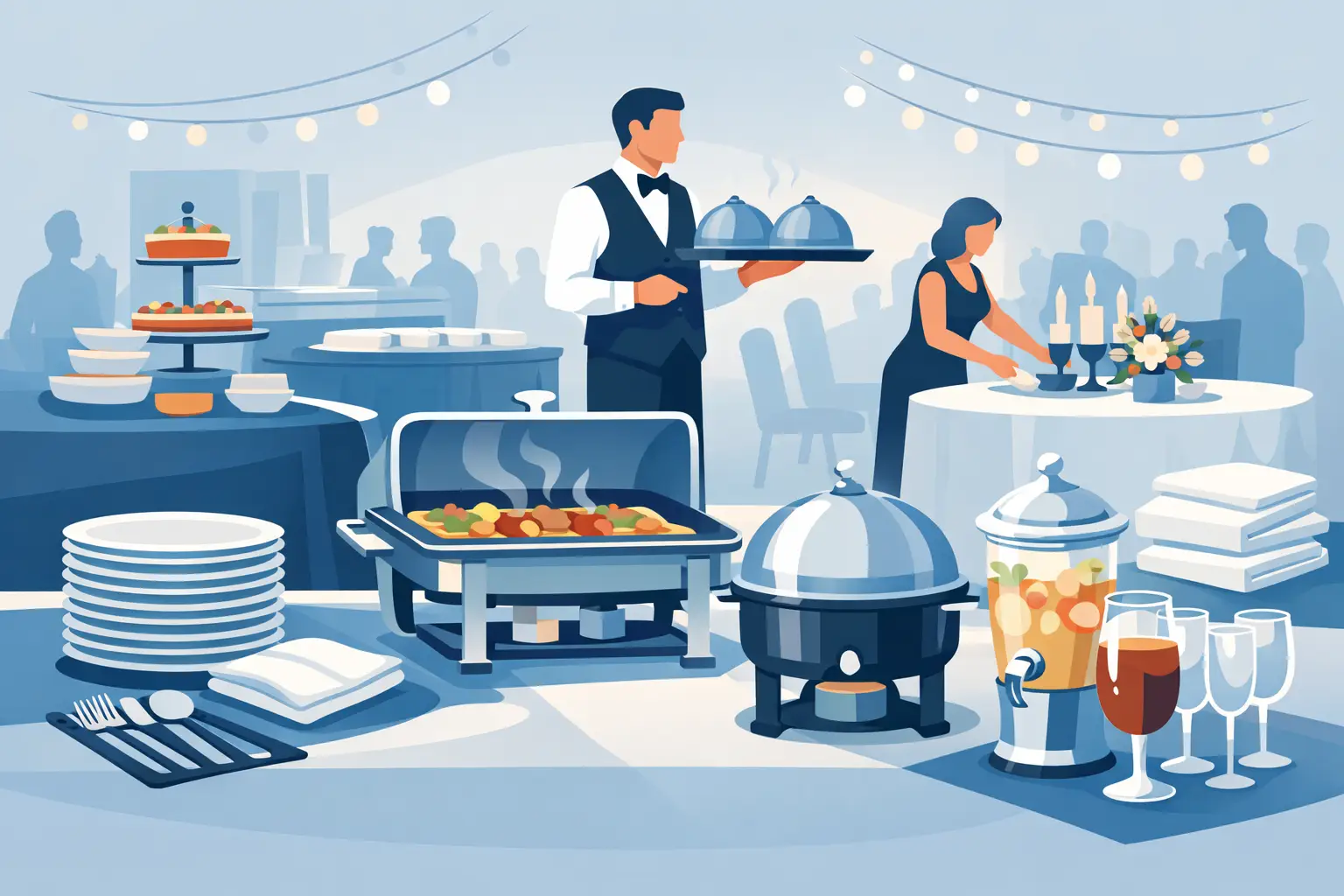
- Food service equipment: Chafing dishes, food pans, serving utensils, beverage urns, coolers, and catering tables help the food stay at the right temperature and give staff a workable serving area.
For many events, it is wise to rent slightly more place settings and glassware than the final guest count. A reasonable buffer helps when a glass breaks, a guest takes a second plate, or a vendor meal is added late. The appropriate extra amount depends on the event, but a tight count can create avoidable stress.
Seating Is More Than a Head Count
A catered dinner usually calls for seating for every confirmed guest, plus room for vendors if meals are being provided to photographers, DJs, planners, or venue staff. The layout matters as much as the chair count. Guests need enough space to pull out chairs, servers need clear paths, and buffet traffic should not cut through dining tables.
Round tables encourage conversation and work well for weddings, showers, reunions, and milestone celebrations. Rectangular tables can be efficient for church functions, community meals, and events with a family-style layout. High-top cocktail tables are useful near a bar, during cocktail hour, or for casual networking, but they should supplement rather than replace dining seating when a full meal is served.
If an event is outdoors, include a realistic rain and sun plan. A tent may be needed to protect guests, food, and linens from the elements. Sidewalls, tent lighting, fans, or heaters may also be worth considering depending on the season and time of day. Food service equipment performs best when it is protected from direct sun, wind, and unexpected rain.
Build a Buffet That Moves Smoothly
A buffet can be simple, but it should be planned with the guest experience in mind. Most buffet setups need enough table length for each food item, serving utensil, chafing dish, and label. There should also be room at the start or end for plates, napkins, and flatware.
Think through the line before placing tables. Can guests enter from one end and exit without creating a bottleneck? Is there space for two lines if the guest count is large? Will guests have a nearby place to set down drinks while serving themselves? These details affect how quickly everyone gets seated and whether the meal feels relaxed.
For a more polished presentation, use linens that coordinate with the event colors and keep food tables distinct from guest tables. Pipe and drape can hide catering prep areas, storage, or an unattractive wall behind the buffet. For weddings and formal events, staging may also help define a sweetheart table, cake display, or presentation area.
Do Not Forget the Bar and Beverage Station
Beverage service often needs its own rental plan. At minimum, consider a bar or beverage table, glassware or disposable drinkware, ice storage, coolers, beverage dispensers, and a place for used glasses. If alcohol is served, the bar setup should support the bartender’s workflow, including room for mixers, garnish trays, bottles, ice, and waste.
A hosted bar may need wine glasses, beer cups or pint glasses, cocktail glassware, and champagne flutes. A nonalcoholic station may call for coffee service, water dispensers, lemonade jars, tea urns, or beverage tubs. The right choice depends on the menu and the formality of the event. Renting glassware creates an elevated look, while quality disposable products can make sense for a large outdoor gathering where cleanup and breakage are bigger concerns.
Plan for Behind-the-Scenes Work
The rentals guests notice are only part of the equation. Caterers also need practical support behind the buffet or kitchen area. Prep tables give staff a sanitary place to plate food and organize supplies. Trash cans, recycling containers, bus tubs, and extra tables help keep the service area clean throughout the event.
For events with a full meal, designate a clearing station for used dishes and glassware. This prevents dirty items from accumulating on guest tables and gives catering staff a predictable place to work. If the venue does not have a kitchen, a tented or screened prep area may be necessary, especially for larger groups.
Lighting is another operational detail that can be overlooked. An evening dinner needs more than decorative lighting. Caterers and bartenders need enough illumination to serve safely, read labels, and handle glassware. Tent lighting, café lights, uplighting, and practical work lights can be combined so the event feels inviting without leaving service areas too dark.
Match the Rental Package to the Event
A small family dinner may only need tables, chairs, linens, place settings, and a few buffet pieces. A wedding reception could require tents, a dance floor, a bar, staging, lighting, dinnerware, glassware, and a complete catering setup. Corporate events and church functions may prioritize efficient seating, crowd flow, audiovisual equipment, and easy cleanup over formal table settings.
The goal is not to rent every available item. It is to rent the pieces that make the meal easy to serve and enjoyable to attend. Paradise Event Rentals can help Central Florida hosts coordinate those categories in one place, with delivery, pickup, and practical support when plans change.
A good final check is to walk through the event from a guest’s perspective: Where do they park, get a drink, sit, find the buffet, dispose of a used napkin, and stay comfortable if the weather changes? If each step has a clear answer, your catered event is set up to feel welcoming from the first arrival to the last plate cleared.