How to Choose Wedding Linens Without Guesswork
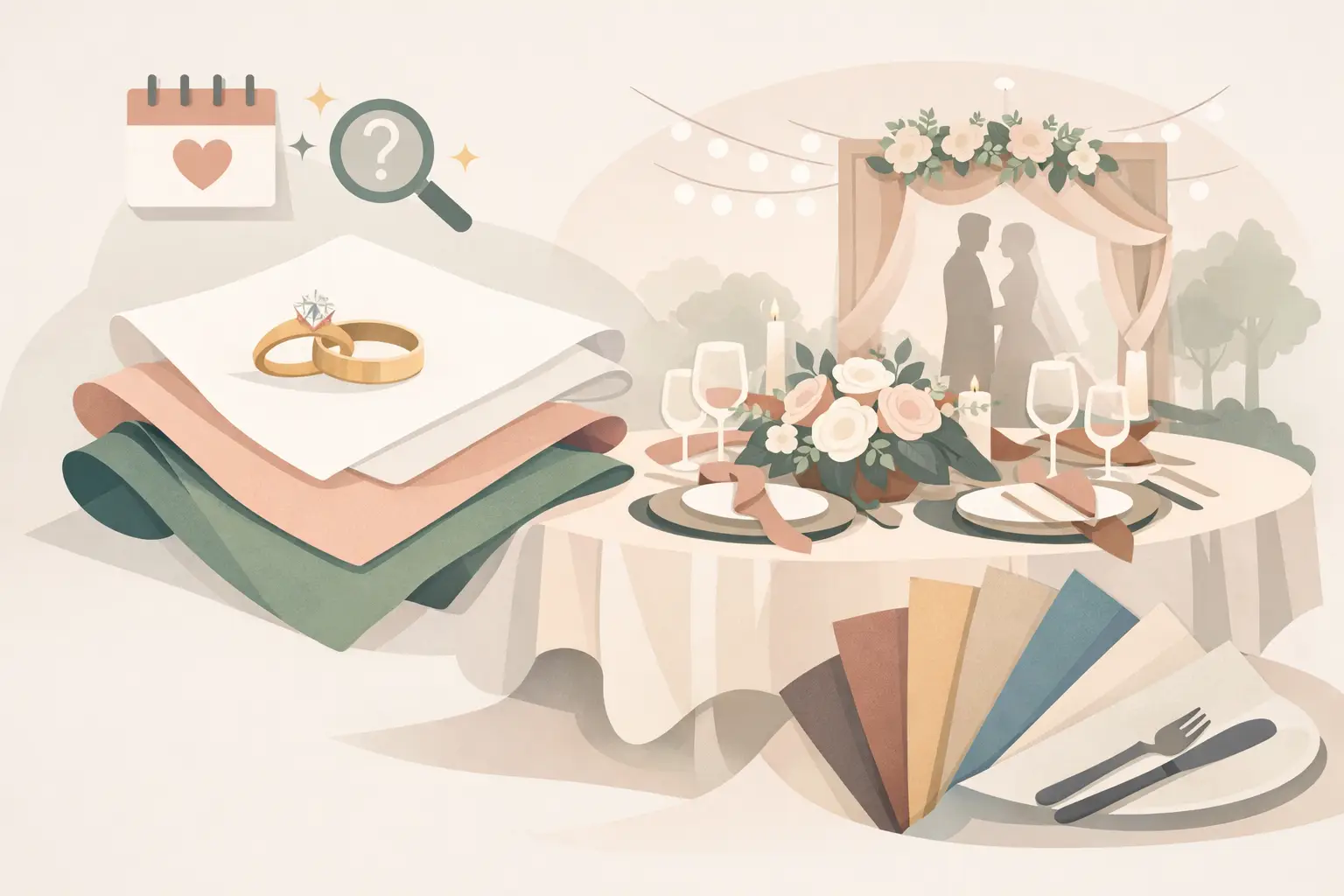
A table can have beautiful dinnerware, fresh flowers, and a great menu, yet still look unfinished if the linen is too short, too shiny, or the wrong shade. Knowing how to choose wedding linens helps turn tables, bars, cake displays, and gift areas into a coordinated part of the celebration rather than an afterthought.
The best choice is not always the most expensive fabric or the boldest color. It is the linen that fits the table correctly, supports your wedding style, photographs well in your venue, and works within the overall rental plan. Start with the function of each table, then make design decisions that are easy to carry through the room.
How to Choose Wedding Linens for Your Tables
Before choosing a color or texture, make a complete list of every surface that needs to be covered. This usually includes guest tables, the head or sweetheart table, cocktail tables, buffet and dessert tables, the cake table, gift table, welcome table, and bar. Some couples also use linens for a memorial table, photo display, or favor station.
Each table has a different job, so it does not need the same treatment. Guest tables typically receive the main linen selection. A cake table may need a more formal floor-length cloth, while a buffet table needs a practical length that hides serving equipment without creating a tripping hazard. Cocktail tables often look best with a snug fitted cover or a floor-length linen that is tied or gathered neatly.
Ask your rental provider for the exact dimensions and shapes of the tables before selecting linens. A 60-inch round, 72-inch round, 6-foot banquet table, and highboy cocktail table all require different sizes. Guessing based on a photo is one of the fastest ways to end up with linens that look too short or drag on the ground.
Choose the Right Drop Length
The “drop” is the amount of fabric that hangs below the edge of the tabletop. It affects both the formality and the practicality of the setup.
For casual or outdoor receptions, a mid-length drop can look clean and relaxed while keeping chair legs and pathways clear. For a formal dinner, floor-length linens create a finished, elevated appearance and hide table legs, storage beneath buffet tables, and less attractive venue furnishings. If guests will be seated at the table, make sure the fabric leaves room for chairs to slide in comfortably.
On Florida lawns, sand, or uneven outdoor surfaces, floor-length linens can collect moisture or dirt at the hem. In that situation, a slightly shorter drop may be the smarter choice. You can still create a polished look with layered runners, overlays, or coordinated napkins.
Start With the Venue and Wedding Style
Linens should support the setting, not compete with it. A waterfront reception in New Smyrna Beach may call for soft neutrals, coastal blues, airy textures, or colors that complement sunset light. A ballroom or church reception can handle deeper tones, satin-like finishes, or more formal layers. For a backyard wedding, durable fabrics and straightforward colors often make setup and cleanup easier.
Look closely at what is already in the space. Consider the wall color, flooring, chairs, ceiling, drape, lighting, and table style. If the venue has patterned carpet or colorful walls, a solid linen may keep the room from feeling busy. If the room is mostly neutral, a colored runner, napkin, or overlay can add personality without requiring every tablecloth to be bold.
Your linens also need to work with the time of day. Bright white can look crisp in daylight but may feel cool under blue-toned evening lighting. Ivory and warm neutrals often flatter candlelight and soft string lighting. Jewel tones can feel rich at night, while pastels are often strongest in natural daylight. Whenever possible, look at fabric samples in lighting similar to your reception.
Select Fabric Based on Look and Use
Fabric affects more than appearance. It determines how the linen drapes, how reflective it is, and whether it suits a high-traffic serving area or a formal head table.
Polyester linens are a dependable choice for many weddings because they are clean-looking, versatile, and available in a wide range of colors. They work well for guest tables, buffet stations, and most standard reception layouts. A basic polyester cloth can look very polished when it fits properly and is paired with quality place settings, napkins, and centerpieces.
For more texture, consider a subtle overlay, runner, or specialty linen on selected tables. Textured fabrics can add dimension without changing the whole room. Sequins, satin finishes, and bold patterns are usually best used with restraint. They can make a sweetheart table, cake table, or welcome station stand out, but covering every table in a highly reflective material may overwhelm the décor and compete with photography.
If your wedding includes food service, pay attention to practicality. Heavily textured cloths can be harder to keep smooth, and delicate-looking fabrics may not be the best option for a busy buffet or children’s table. Save the statement linens for areas that will be photographed most often and use durable choices where guests and staff will be moving frequently.
Build a Color Plan, Not a Collection of Colors
A coordinated linen plan generally has one base color, one accent color, and one or two supporting neutrals. This gives the room variety without making every table look unrelated.
White, ivory, champagne, taupe, gray, and black are common base colors because they work with many themes. From there, you can bring in wedding colors through napkins, runners, chair accents, floral arrangements, menus, or glassware. This approach is often more budget-friendly than renting a specialty tablecloth for every guest table.
Be careful when matching colors from a phone screen. Navy, dusty blue, slate, and royal blue can look very different in person. The same is true for blush, mauve, rose, and champagne. If exact matching matters, compare samples against bridesmaid dresses, invitation colors, or floral inspiration before placing the final order.
White and ivory deserve special attention. They are not interchangeable under every light. Pure white usually feels crisp and modern, while ivory has a softer, warmer appearance. If your dress, flowers, or venue décor lean warm, ivory may blend more naturally. If your design is clean and high-contrast, white may be the better fit.
Use Layers Where They Make the Biggest Difference
You do not need multiple layers on every table to create a complete reception design. In many cases, a full-length base linen plus a folded napkin is enough for guest tables. Add a runner or overlay only when it helps define the table or carry an accent color through the room.
The head table, sweetheart table, cake table, and welcome table are good places for extra detail because they are focal points. A specialty overlay on one of these tables can make the room feel more intentional while keeping the rest of the linen order manageable. This also makes it easier to adjust if the guest count changes late in the planning process.
For rectangular banquet tables, runners can create a clean center line beneath florals, candles, or family-style serving pieces. On round tables, an overlay can soften the look and add shape. The choice depends on the centerpiece design. A wide floral arrangement may cover most of a runner, while low candles and bud vases allow the fabric detail to show.
Plan for Guest Comfort and Reception Logistics
Wedding linens should look good from across the room and work well up close. Avoid fabric that interferes with chair placement, catches easily on shoes, or hangs into walkways. For buffet tables, allow enough overhang to conceal equipment but not so much that guests brush against the fabric while serving themselves.
If your reception is outdoors, plan for weather. Wind can move lightweight overlays, and humid conditions may affect fabric that touches damp grass or decking. Tents, flooring, lighting, and linens should be considered together, especially for Central Florida weddings where the weather can change quickly. A backup layout can save time if the ceremony or cocktail hour needs to move under cover.
Also consider the setup schedule. Linens should be placed after tables are positioned and before centerpieces, place settings, and glassware are installed. If the room is being flipped between ceremony and reception, choose a design that can be set efficiently. Simple, well-fitted linens are often the right answer when timing is tight.
Set a Linen Budget That Prioritizes What Guests See
It is easy to spend too much on linens when every option is viewed separately. Instead, look at the room as a whole. Allocate more of the budget to guest-table coverage and major focal points, then use standard linens for service tables that will not be photographed as heavily.
A practical rental order might use neutral floor-length linens for dinner tables, a coordinating color for napkins or runners, and one upgraded linen for the sweetheart or cake table. This creates a cohesive result without requiring premium fabric everywhere. It also leaves room in the budget for essentials such as chairs, dinnerware, glassware, lighting, or a weather-ready tent.
When requesting a quote, share your guest count, table sizes, venue type, color palette, and whether the event is indoors or outdoors. Paradise Event Rentals can help coordinate linens with tables, chairs, catering items, and other reception essentials so the quantities and colors make sense together.
The right linens do more than cover tables. They make the reception feel prepared, comfortable, and intentionally yours. Choose the fit first, keep the color plan focused, and reserve the extra detail for the places guests will remember most.