8 Best Wedding Bar Setups for Any Venue
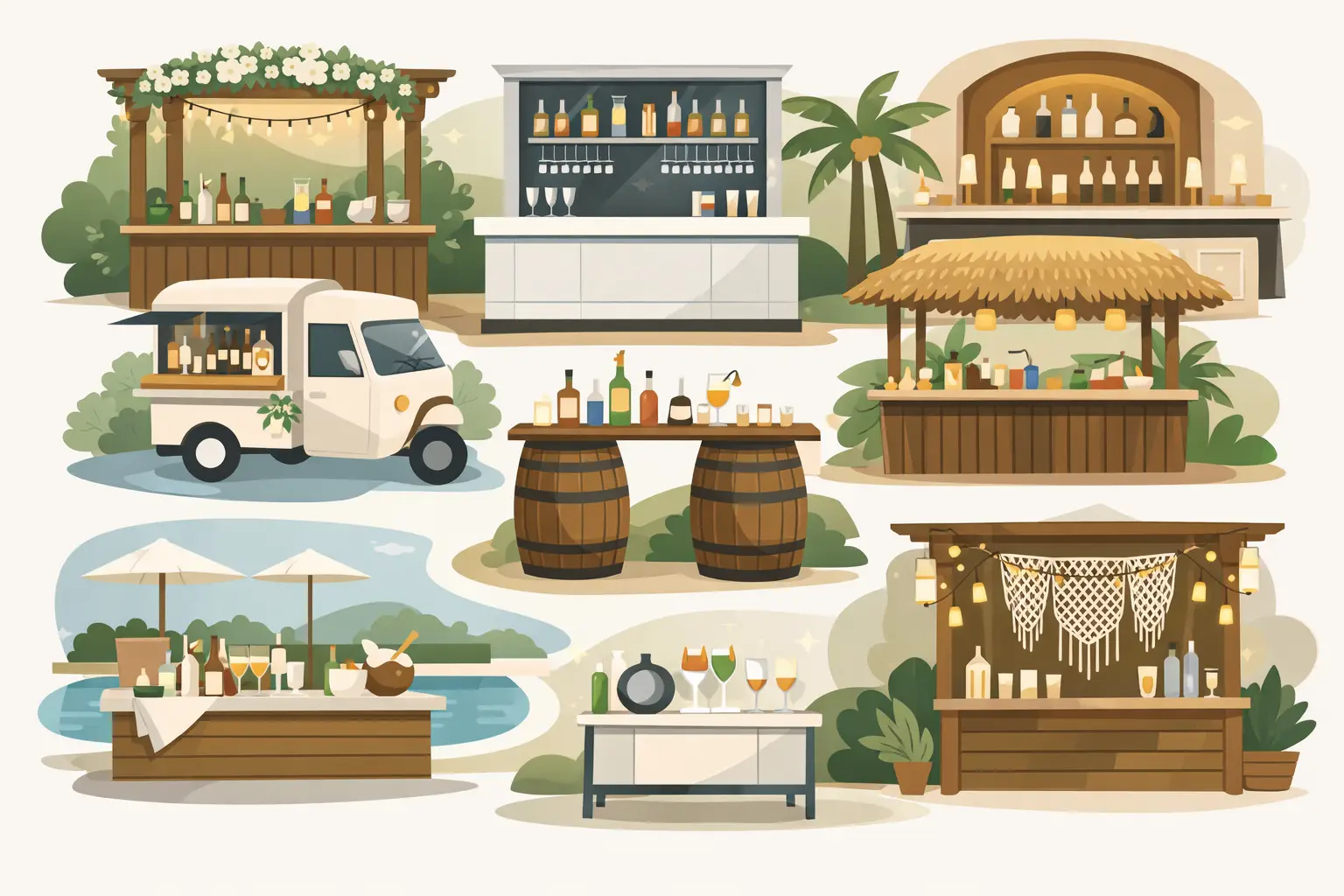
A crowded bar can change the mood of a reception fast. Guests start lining up, the dance floor thins out, and what should feel easy starts feeling slow. That is why choosing the best wedding bar setups is less about looks alone and more about keeping service moving, matching your venue, and making the whole reception feel organized.
The right setup depends on your guest count, floor plan, drink menu, and whether your wedding is on the beach, under a tent, in a backyard, or inside a formal venue. A bar that works beautifully for 60 guests may struggle at 150. A setup that looks great in a ballroom may not make sense for an outdoor reception where power, shade, and traffic flow matter more.
What makes the best wedding bar setups work
The best bars do three jobs at once. They serve drinks efficiently, fit the style of the event, and stay practical for the staff working behind them. If one of those pieces is off, you usually feel it right away.
Size is the first factor. A small bar with one service point can be enough for a more intimate wedding with beer, wine, and a simple signature cocktail. For larger receptions, a single bar often creates long lines unless you add another station, keep the menu tight, or place self-serve options for water and nonalcoholic drinks elsewhere.
Placement matters just as much. Bars should be easy to find without becoming a bottleneck. Putting the main bar directly at the entrance to the reception area can create congestion. Tucking it too far away can make guests feel disconnected from the action. In most cases, the sweet spot is visible and accessible, but not in the middle of the main traffic path.
Then there is the service side. Bartenders need enough back-bar room for coolers, ice, mixers, glassware, and waste. Couples often focus on the front-facing style, which makes sense, but the working side of the bar is what keeps drinks coming out quickly.
8 best wedding bar setups to consider
1. The classic single central bar
This is one of the most common and dependable choices. A central bar works well for weddings with a moderate guest count and one main reception space. It gives everyone a clear place to order and keeps staffing simple.
It works best when the footprint around it is open enough for lines to form without blocking tables or the dance floor. If you are planning a straightforward beer, wine, and liquor service, this setup is often all you need. For larger weddings, though, one bar can become a choke point unless the service team is sized correctly.
2. Double-sided bar for faster flow
A double-sided setup is one of the best wedding bar setups for busy receptions because it serves more guests at once without requiring two fully separate bar locations. This style is especially useful under tents or in open venues where you have room to center the bar and approach it from both sides.
The main advantage is speed. Guests do not all funnel into one narrow line, and bartenders can divide service more evenly. The trade-off is space. You need enough room around the bar to make both sides functional, and you need a floor plan that supports movement from multiple directions.
3. Two smaller bars instead of one large bar
For larger guest counts, two bars placed on opposite sides of the reception can work better than one oversized central station. This setup shortens lines, spreads out traffic, and keeps guests from crossing the whole venue just to grab a drink.
This is often a smart option for weddings with separate zones, such as a dining area on one side and a dance floor or lounge area on the other. It also helps in long or narrow spaces where one bar location would leave part of the crowd underserved. The main consideration is inventory and staffing. Two bars usually mean more setup coordination, more duplicate supplies, and a little more planning.
4. Satellite bar near the dance floor
A satellite bar is a smaller secondary station that supports the main bar. It is not designed to carry the full beverage program. Instead, it handles high-demand items in the busiest area of the reception.
This setup works well when guests are likely to spend most of the night dancing or gathering in one section of the venue. A compact bar serving beer, wine, canned drinks, or one signature cocktail can reduce pressure on the primary bar and keep people near the party instead of standing in line across the room.
5. Beer, wine, and signature cocktail bar
Not every wedding needs a full liquor bar. In many cases, a more focused menu is the better setup. Beer, wine, and one or two signature cocktails can speed service, control costs, and simplify the bar footprint.
This is a practical choice for couples who want a polished guest experience without overcomplicating drink service. It is also useful in outdoor settings where space, refrigeration, and restocking may be more limited. The trade-off is guest preference. A tighter menu usually works well, but it helps to be realistic about your crowd.
6. Indoor-outdoor split bar setup
Some weddings naturally flow between spaces. Cocktail hour may happen outside, while dinner and dancing move indoors or under a tent. In that case, splitting bar service by phase of the event can keep things cleaner and more efficient.
A smaller bar for cocktail hour and a larger reception bar for the main event often makes more sense than trying to force one station to serve every part of the day. This approach also helps with resets. Staff can close one area and fully focus on another as the event progresses.
7. Backdrop bar for formal receptions
When style matters as much as service, a backdrop bar can anchor the room visually. This setup is common in ballrooms, tented receptions, and more formal weddings where the bar is part of the design plan instead of just a utility station.
The front of the bar can be dressed with linens, coordinated finishes, or decorative elements that match the reception look. Behind it, pipe and drape, lighting, or shelving can create a finished presentation. The caution here is practical: decor should never crowd the service area or slow the staff down.
8. Self-serve companion stations with a staffed bar
A staffed bar does not have to handle every beverage. In fact, one of the easiest ways to improve service is to pull nonalcoholic traffic away from the alcohol line. Water stations, tea dispensers, lemonade, or coffee service can work as companion stations elsewhere in the venue.
This setup is especially helpful for family weddings, daytime receptions, and warm-weather events in Central Florida. Guests who just want water or iced tea should not need to wait behind cocktail orders. A separate beverage station keeps the main bar focused on mixed drinks and alcohol service.
Matching your bar setup to the venue
Beach weddings and outdoor waterfront receptions usually need compact, stable setups with close attention to wind, heat, and access. Glassware, ice management, and shaded placement matter more than couples sometimes expect. In these settings, a simple menu and clearly defined bar area usually perform better than a highly elaborate concept.
Backyard weddings often have flexibility, but they also come with hidden limitations. Uneven ground, narrow gates, and limited power can affect where the bar goes and how staff can work. A smaller main bar plus self-serve beverage support is often a smart fit here.
Tented weddings give you more control, which is why many couples prefer them. You can position bars based on guest flow, seating, and dance floor placement instead of working around a fixed room. This is where double-sided bars and formal backdrop bars tend to shine.
Ballrooms and indoor venues usually support more polished presentation, but the same service rules still apply. If the room is wide and the guest count is high, one bar at the back wall may not be enough. Good aesthetics do not fix a slow line.
Rental details couples should not overlook
Once you choose a bar style, the support pieces matter. Glassware, ice bins, coolers, bar backs, cocktail tables, trash setup, and linen choices all affect how complete the station feels and how well it functions. Many bar issues are not really bar issues at all. They are support-equipment issues.
Timing matters too. If your reception includes a quick room flip or a transition from ceremony to cocktail hour, your bar plan should account for setup and access. Working with one rental partner for bars, tables, linens, glassware, and related event equipment can make that process much easier, especially when details shift close to the date.
For many local couples, that is where a full-service company like Paradise Event Rentals can simplify planning. When your bar, catering support items, and reception rentals are coordinated together, there is less room for timing gaps and last-minute scrambling.
How to choose the right setup for your wedding
Start with guest count, then look at your venue layout, then decide how broad the drink menu really needs to be. That order helps. Couples often start with appearance, but capacity and placement should come first.
If you are hosting under 75 guests, one well-planned bar may be enough. If you are closer to 150 or more, a second service point is often worth considering. If your venue has multiple zones, spread service out. If your menu is simple, let that work in your favor.
The best choice is usually the one that feels easy to guests and manageable for the people serving them. A wedding bar should support the celebration, not become a project people have to navigate. When the setup fits the space and the crowd, everything feels smoother from the first toast to the last call.
If you are deciding between two options, choose the one that makes service easier, not just the one that photographs best. Your guests will remember how the night felt.